Bahrain Visa 2026: What NPRA Actually Charges for Each eVisa Category
Planning entry into the Kingdom starts with sorting out your Bahrain visa, and the good news is that Bahrain runs one of the more open entry systems in the Gulf, with the eVisa portal covering a wide range of nationalities across several visa categories. This guide breaks down the current bahrain visa types, the exact application and issuance fees charged by the Nationality, Passports and Residence Affairs (NPRA), and how the process actually plays out from application to arrival.
Whether you’re booking a short holiday, visiting relatives, or sorting out a working visa for Bahrain through a Bahraini employer, everything below reflects what’s currently in effect for 2026, along with a major regional change that’s about to reshape how Gulf travel works altogether.
What Is a Bahrain Visa and Who Needs One
A Bahrain visa is your authorization to enter and stay in the Kingdom, and whether you need one at all depends entirely on your passport. GCC citizens, Saudi Arabia, the UAE, Qatar, Kuwait, and Oman, don’t need any visa, they enter with just their national ID card. Everyone else falls under one of Bahrain’s visa bahrain categories, managed almost entirely online through NPRA’s eVisa system rather than embassy-based paperwork.
Bahrain splits its Bahrain entry visa categories into two practical groups:
- Visit visas: covering tourism, business trips, and family visits, these don’t authorize any form of employment.
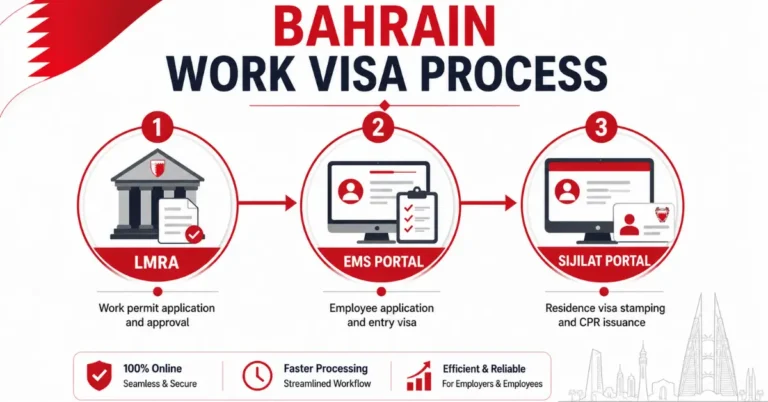
- Work and residence permits: sponsored by a Bahraini employer and processed through the Labour Market Regulatory Authority (LMRA), separate from the standard eVisa system entirely.
Overstaying or working on the wrong visa type carries real consequences in Bahrain, including fines and potential deportation, so confirming the right category before you travel matters.
Core Policy Breakdown: Bahrain’s Current Visa Categories
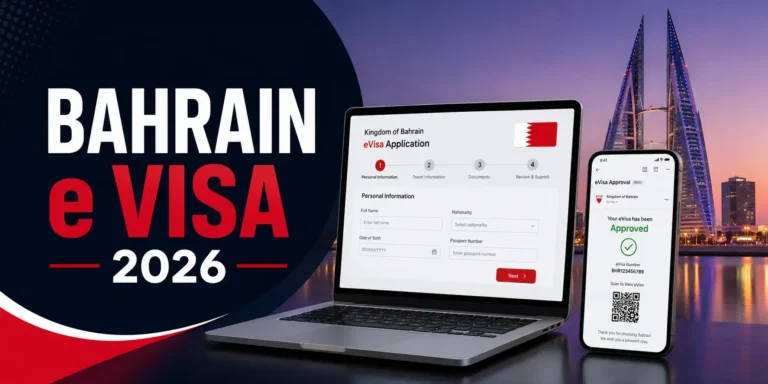
The bahrain e visa system, run through evisa.gov.bh, spans multiple distinct visa categories rather than a single flat product, and NPRA structures every fee as two separate charges: a non-refundable application fee plus a visa issuance fee. Per NPRA’s published processing times, the standard single-entry, GCC resident, and US 10-year categories all clear within 1 working day, though categories requiring in-person submission or additional document review can take longer, a common question for anyone checking how long does it take to get a Bahrain visa.
Standard eVisa options (verified against NPRA’s official fee schedule):
- Two-Week Single-Entry eVisa: BHD 5 application fee + BHD 5 issuance fee, totaling BHD 10, the most common option for short tourist trips.
- One-Year Multiple-Entry eVisa (GCC Residents): BHD 5 application fee + BHD 40 issuance fee, totaling BHD 45, for expatriates legally residing in another GCC state.
- Extensions: a flat BHD 25 fee applies across most eVisa categories, adding 14 days to an existing visa, provided you apply before the current one expires.
Visa on arrival: available to citizens of a defined list of eligible countries directly at Bahrain International Airport, follows a separate fee structure from the eVisa categories above, so it’s worth so confirming the current rate for your nationality on the NPRA site before you fly. If you’re only passing through Bahrain on a layover, a different rule applies, see our Bahrain transit visa guide for the 8-hour threshold that determines whether you need a visa at all.
GCC residents e-visa: a separate track for expatriates legally residing in Kuwait, Oman, Qatar, Saudi Arabia, or the UAE. The 3-month multiple-entry version requires your existing GCC residence permit to remain valid for at least three more months, and it excludes applicants classified under labour occupations.
10-year multiple-entry e-visa for US citizens: under a reciprocal agreement with the United States dating back to October 2020, American passport holders can secure a decade-long multiple-entry visa. Per NPRA’s official fee schedule, this runs BHD 5 application fee + BHD 60 issuance fee, totaling BHD 65, plus the standard BHD 25 extension fee if needed.
Bahrain Visa Types and Fees at a Glance
Note: Fees reflect NPRA’s published schedule for the categories above. Bahrain runs several additional nationality-specific eVisa tracks, including separate arrangements for UK and Ireland citizens and GCC visitors, each with its own issuance fee, so it’s worth confirming your exact category on the NPRA portal before applying.
Work Visas: A Different Process Through LMRA
Unlike visit visas, a bahrain work visa doesn’t run through the NPRA eVisa portal at all. Employment-based residence, whether you’re searching for a general working visa in Bahrain or a specific role, is handled by the Labour Market Regulatory Authority (LMRA), which manages work permit approvals separately from tourist and business entry. Your employer initiates the process by securing a work permit tied to your role, after which residency formalities, including biometric registration, are completed through NPRA once you arrive. Self-sponsored work visas don’t exist under this system, every employment visa requires a Bahraini company or registered employer acting as sponsor, and LMRA’s own guidance confirms that all visa categories outside employment and dependent permits fall under NPRA instead.
Step-by-Step: Applying for a Bahrain eVisa
- Confirm your nationality’s eligibility on the official eVisa portal, since requirements and available visa types vary by country.
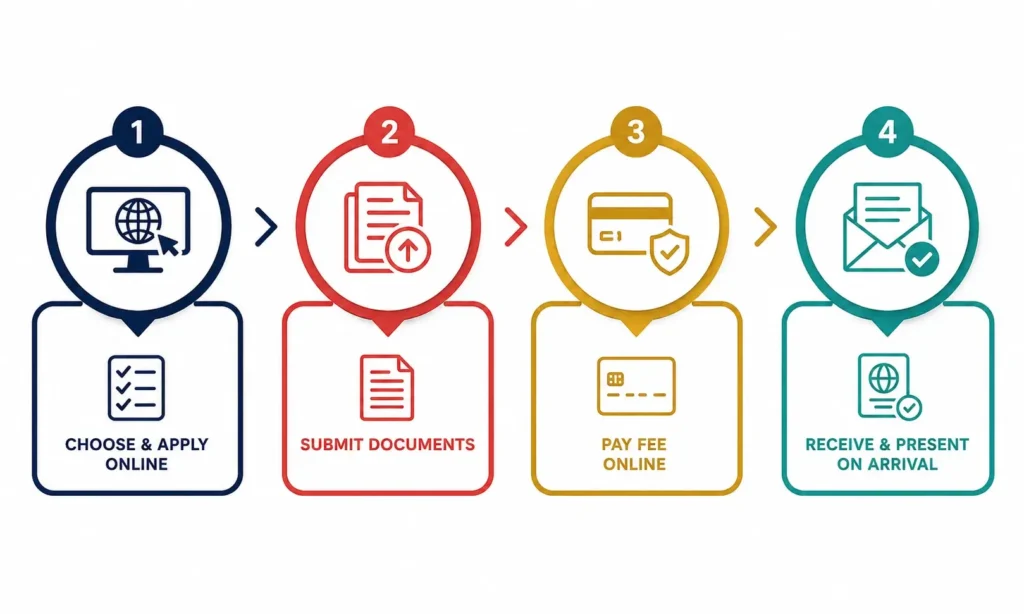
- Choose the correct visa category based on your purpose, single-entry tourism, multiple-entry, business, or GCC resident status if applicable.
- Gather your documents: a passport valid for at least 6 months beyond your arrival date, a recent passport-style photo, and a confirmed round-trip ticket if travelling by air.
- Apply directly through evisa.gov.bh, the official online Bahrain visa channel, avoiding third-party services that charge additional fees for the same government process.
- Pay the application fee online using a credit card, debit card, or accepted digital payment method.
- Wait for approval, which for most standard single-entry and multiple-entry categories runs as fast as 1 working day per NPRA’s published processing times, though this varies by visa type and nationality. You can check your Bahrain visa status directly through the NPRA or eVisa portal once submitted.
- Present your eVisa on arrival, either as a printout or on your phone, for verification at Bahrain International Airport.
The Gulf Unified Tourist Visa: What’s Changing
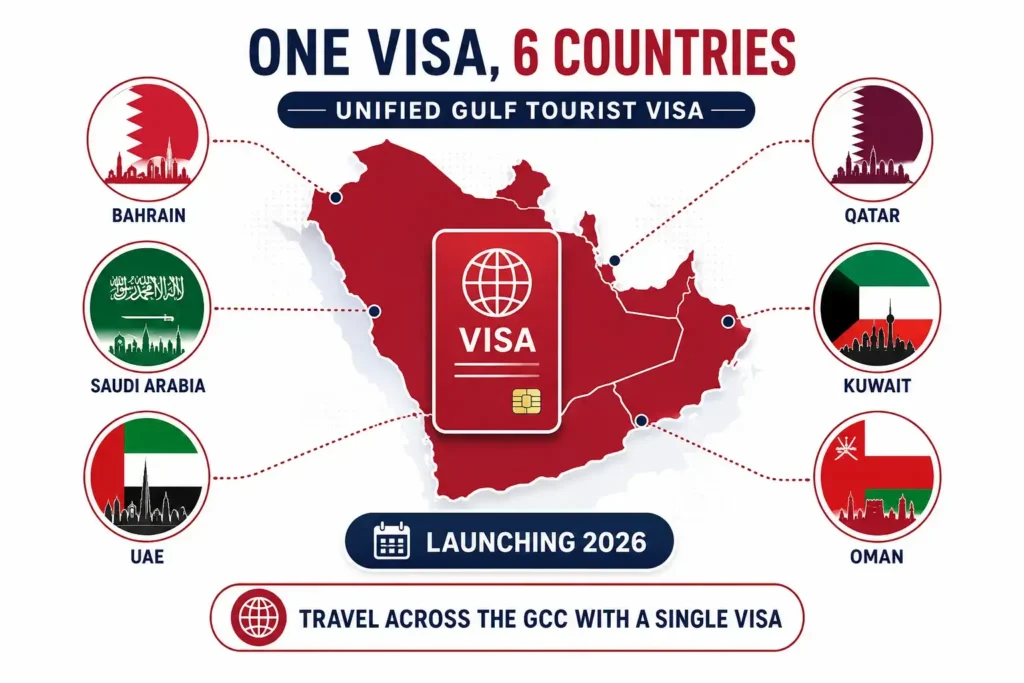
Bahrain’s visa policy is set for its biggest shift in years with the introduction of a unified Gulf tourist visa, a single-permit system designed to work across all six GCC states. According to Gulf Daily News, Bahrain’s own English-language paper, the Saudi Minister of Tourism confirmed the launch is set for 2026, describing a Schengen-style experience where one visa covers travel across the entire Gulf region. The scheme was formally approved by GCC states back in 2023, and its rollout has picked up added relevance with new regional routes opening, including the recently launched Bahrain-Qatar ferry connection.
Once active, travellers holding this single visa will be able to move across Bahrain, Saudi Arabia, the UAE, Qatar, Kuwait, and Oman without applying separately for each destination, removing a real friction point for anyone planning a Gulf-wide trip. Until the rollout is complete and details are formalised, the current individual bahrain e visa system covered throughout this guide remains the standard, working route into the Kingdom.
Frequently Asked Questions
Do I need a visa to visit Bahrain?
It depends on your passport. GCC citizens don’t need any visa and enter with a national ID. Citizens of most other countries, including those applying for a Bahrain visa from India or the UK, need either an eVisa applied for in advance or, for eligible nationalities, a visa on arrival at Bahrain International Airport.
How much does a Bahrain visa cost?
A two-week single-entry eVisa totals BHD 10, combining a BHD 5 application fee and a BHD 5 issuance fee. A one-year multiple-entry eVisa for GCC residents totals BHD 45. Visa on arrival fees vary by nationality, so it’s worth checking the current rate on the NPRA site before you travel.
Is a visa on arrival an option for entering Bahrain?
Yes, provided your nationality is on NPRA’s eligible list. This route runs directly through Bahrain International Airport, with fees that vary by nationality, so confirming the current rate for your passport on the official NPRA site before departure is worth the extra step.
How long does a Bahrain eVisa take to process?
Standard single-entry and multiple-entry categories often clear within 1 working day per NPRA’s published timelines, though processing can extend further for categories requiring extra document review. Applying a few days ahead of travel is still a sensible buffer.
Is it legal to take up work on a Bahrain visit visa?
No, employment of any kind, whether paid or unpaid, sits entirely outside what a visit visa permits. Taking a job while holding one puts you at risk of fines and deportation. A legitimate work permit sponsored by a Bahraini employer through LMRA is the only lawful route into employment.
Does the upcoming Gulf unified tourist visa replace Bahrain’s eVisa system?
Not yet. The unified visa was approved by GCC states in 2023 and is set for launch in 2026, but a firm rollout date and full details haven’t been finalised. Bahrain’s existing eVisa arrangement covered throughout this guide stays the standard entry method until the wider six-country system is fully in place.
For the current eligibility list and to apply, use the official NPRA visa services portal or the Bahrain eVisa application system, and confirm work permit requirements directly through Bahrain’s Labour Market Regulatory Authority before making any employment-related travel plans.