
The Saudi Iqama 2026 rollout brought the biggest change to the Kingdom’s residency card in years: a physical card now valid for five years instead of one, delivered straight to your registered address rather than collected in person. But the card’s new validity period doesn’t mean your residency itself lasts five years without any action, that part still runs on its own separate renewal clock through Absher, and mixing up the two is where most people run into trouble. This guide breaks down exactly what the 5-year card changes, what digital Iqama actually means day to day, and how renewal works now.
What Is a Saudi Iqama?
An Iqama is the residence permit that identifies you as a legal resident of Saudi Arabia, tied to your employer, family sponsor, or, in a growing number of cases, to Premium Residency status rather than traditional sponsorship. It’s what lets you open a bank account, sign a lease, enroll children in school, and complete essentially any government transaction in the Kingdom. If you’re still working out how to get your first Iqama through employer sponsorship in the first place, our Saudi work visa guide covers that entry process, including the skill-based classification your employer registers you under, from job offer through to Iqama issuance.
The New 5-Year Iqama Card: What Changed in 2026
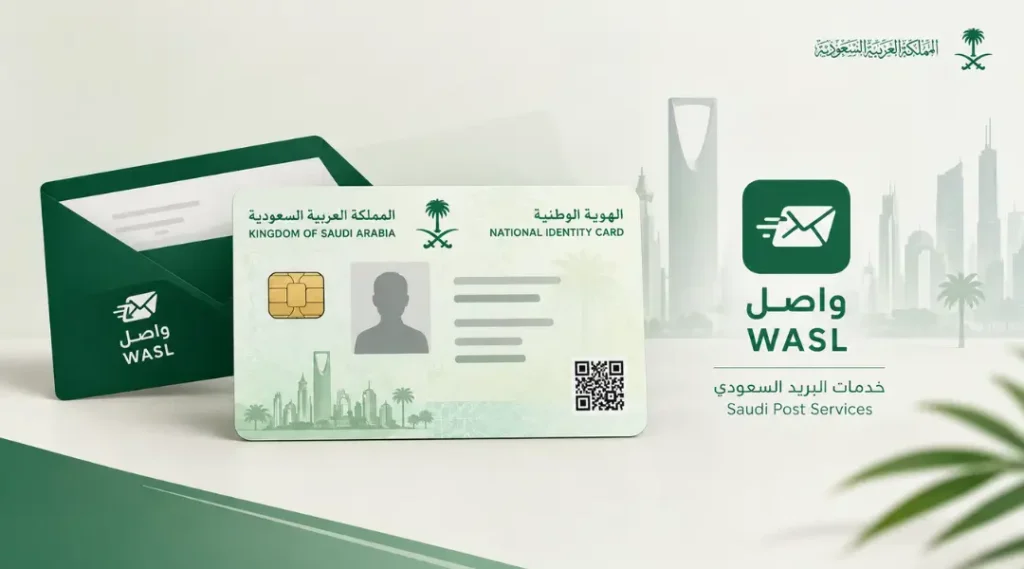
Starting in early 2026, the Ministry of Interior began issuing a redesigned Iqama card with a standard 5-year physical validity, replacing the old annual laminated card that needed reprinting every year. The new card is built on more durable, security-enhanced material with updated biometric fields, part of a broader shift toward a card that’s meant to last rather than be replaced yearly. Rather than picking the card up at a service office, it’s delivered to your registered National Address through the Wasil postal service; there’s no in-person pickup option built into the new process.
This is a genuinely new Iqama card Saudi residents haven’t seen before, but it changes the card, not your underlying legal status. That distinction matters more than it sounds.
Iqama Card vs Digital Iqama: Which One Actually Matters
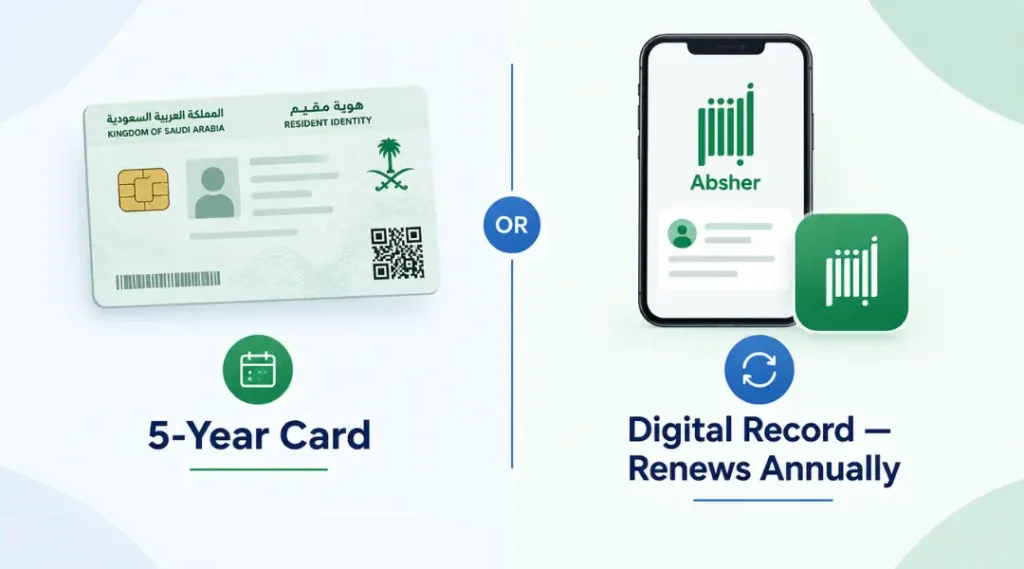
This is where the 5-year card confuses people. The iqama card vs digital iqama distinction comes down to this: your physical card can now show a five-year validity date, but your actual right to remain in the Kingdom is still renewed on its own separate schedule (typically annual, though the exact cadence can depend on your visa category) through Absher or Muqeem, independent of what’s printed on the plastic.
The physical card and the digital renewal have been deliberately decoupled, so a valid-looking five-year card in your wallet doesn’t mean you can skip your renewal. Digital Iqama, the record maintained on Absher, is the version government systems and employers actually check, and it’s this record, not the card in your pocket, that determines whether your residency is currently active.
Saudi Iqama Systems at a Glance
Premium Residency: A Sponsor-Free Alternative
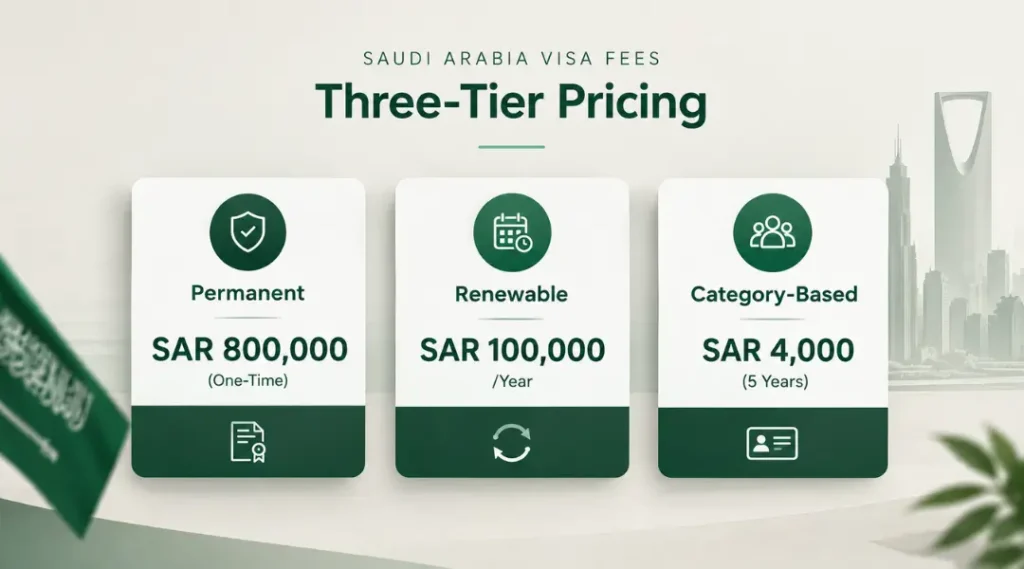
Separate from the standard employer-sponsored Iqama, Saudi Arabia’s Premium Residency programme lets qualifying expatriates hold long-term residency without a Saudi sponsor at all. It comes in a few forms:
- Permanent Premium Residency: a one-time fee of roughly SAR 800,000, granting indefinite residency status.
- Renewable Premium Residency: an annual fee of roughly SAR 100,000, renewed yearly rather than paid once.
- Category-Based Residency: aimed at special talent, investors, entrepreneurs, and real estate owners, priced at roughly SAR 4,000 for up to five years.
These figures are widely reported but not listed on a single, consistently updated public fee page, so confirm the current cost for your specific category directly through the Premium Residency programme before applying.
How to Renew Your Saudi Iqama 2026
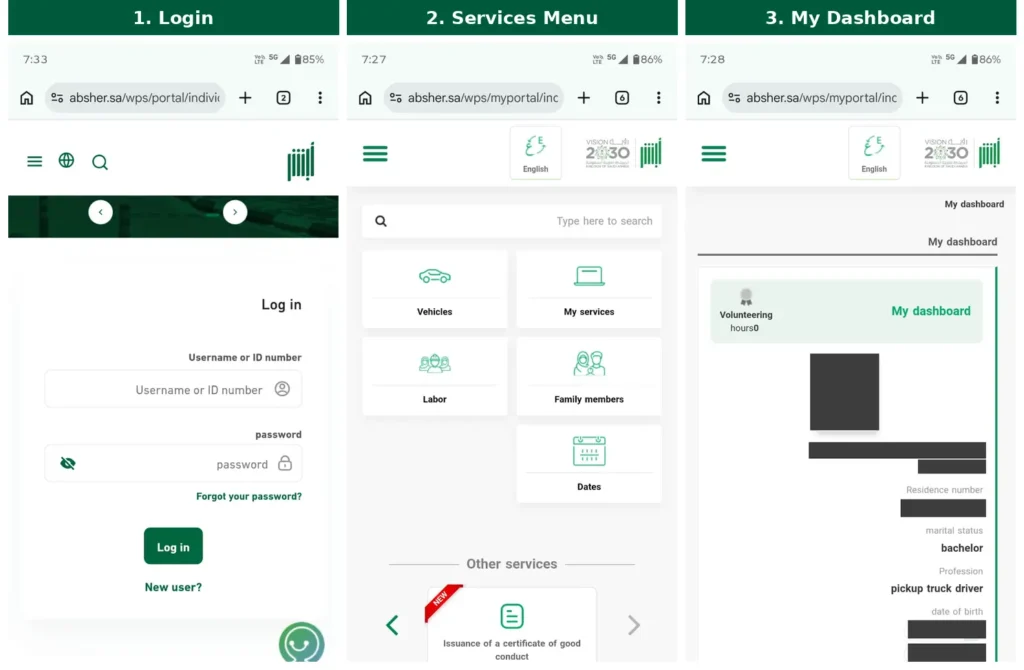
For standard employer-sponsored Iqamas, renewal runs through a few connected government platforms rather than one single site:
- Your employer initiates the work permit renewal through Qiwa, selecting the renewal duration that aligns with your contract.
- Any outstanding expatriate levy or dependent fees are settled through SADAD, Saudi Arabia’s government payment system, since unpaid fees will hold up the renewal.
- Residency status is confirmed and renewed through Absher or Muqeem, updating your digital Iqama record directly.
- If you want an updated physical card reflecting your renewed status, this can be requested separately through Absher, with delivery again handled via Wasil to your National Address.
Employers are legally responsible for renewing the main Iqama on time, but it’s worth checking your own status on Absher rather than assuming HR has it handled, since a lapsed Iqama can restrict exit and re-entry permits and other services in your name.
Where the Skill-Based Classification Fits In
Your Iqama’s registered profession, and the fees and renewal terms attached to it, are shaped by which skill tier your job falls under, a system Saudi Arabia introduced in 2025 and expanded through 2026. This classification is decided when your work visa is first processed and carried through to your Iqama, rather than something you choose separately during renewal. Our Saudi work visa guide covers exactly how the high-skilled, skilled, and basic tiers are scored and what that means for your visa terms.
Frequently Asked Questions
Does the new 5-year Iqama card mean I don’t need to renew for five years?
No. The card’s five-year physical validity is separate from your residency status, which still needs annual renewal through Absher or Muqeem. Treat the card’s expiry date as informational rather than as your actual renewal deadline.
How is a 5-year Iqama in Saudi Arabia different from Premium Residency?
The 5-year card is simply a longer-lasting physical version of the standard, sponsor-tied Iqama, your annual renewal obligation and employer sponsorship remain unchanged. Premium Residency is a separate, sponsor-free status entirely, available at a significantly higher cost, that doesn’t require an employer or family sponsor to maintain.
Can I get a physical Iqama card without going through Absher?
No. Both the digital record and the request for an updated physical card run through Absher, there’s no separate offline application route for the card itself.
What happens if my Iqama expires while I’m outside Saudi Arabia?
This can create serious complications for re-entry, and the process to resolve it typically requires coordination between your employer and Saudi authorities before you travel back. Confirm your Iqama and exit re-entry visa status through Absher well before departure if you’re traveling near your renewal date.
Do dependents get their own 5-year Iqama card?
Family members sponsored under your Iqama can be issued their own resident ID cards through the same Absher-based process, subject to the same delivery method via Wasil to your registered National Address.
Note: For the current Iqama renewal status, fees, and to request a physical card, use the official Absher platform or Muqeem. For work visa and skill classification details, refer to the Ministry of Human Resources and Social Development.