Nusuk Umrah Visa 2026: New Rules, Fees & How to Apply
Umrah used to run on paperwork and patience, a travel agent’s fax machine, a stack of photocopies, and a wait that could stretch for weeks. That entire process now lives inside one platform. Nusuk, the Saudi Ministry of Hajj and Umrah’s official digital gateway, handles everything from visa applications to the permit you need just to step inside Masjid al-Haram, and the rules governing it changed twice in the past year alone. Anyone applying for an Umrah visa in 2026 is working under a shorter entry window, a tightened booking requirement, and, for the first time, the option to enter more than once on a single visa. Here’s exactly how the system works right now.
What Nusuk Actually Does
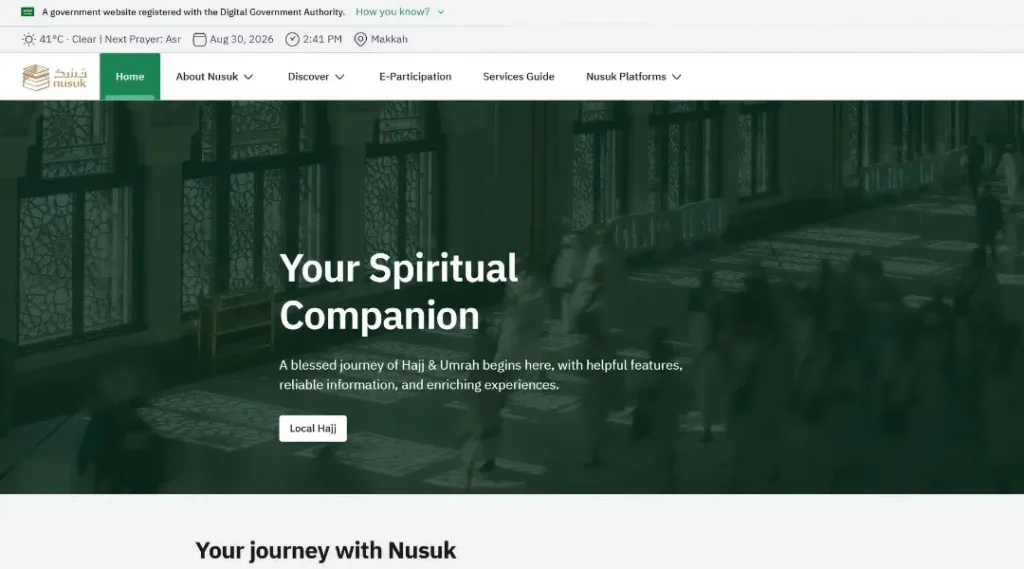
Nusuk isn’t just a visa portal, it’s the single platform Saudi Arabia built to manage the entire pilgrim journey. Pilgrims use it to apply for the Umrah visa itself if their nationality qualifies for direct access, book Ministry-approved hotels in Makkah and Madinah, arrange the ground transport that visa applications now require, and reserve timed entry permits for Masjid al-Haram and Rawdah visits in Madinah once they’ve arrived. Nusuk itself doesn’t make the final decision to approve or deny a visa application, that authority sits with Saudi immigration and the Ministry, but for the vast majority of pilgrims it’s the only interface they’ll ever touch.
Who Can Apply Directly Through Nusuk
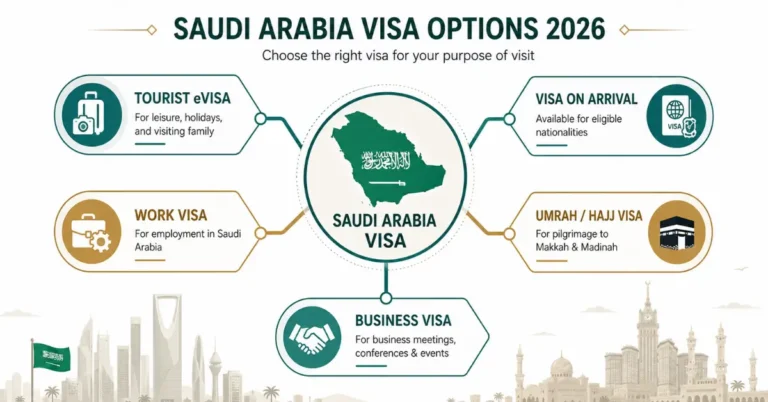
Access to the platform splits along the same lines as Saudi Arabia’s tourist eVisa system. If your passport belongs to one of the eVisa-eligible or visa-exempt nationalities, you can apply for the dedicated Umrah visa directly through Nusuk, or use the tourist eVisa itself, which also permits Umrah outside the Hajj blackout period.
If your nationality isn’t on that list, and this includes several of the countries that send the largest numbers of pilgrims each year, Nusuk won’t process your application directly. You’ll need to go through a licensed Umrah agent in your home country, who files the application on your behalf using the same underlying system. Either way, once you’re approved, Nusuk is where you’ll manage your hotel, transport, and mosque entry permits regardless of which visa route got you there.
The New Entry Window: 30 Days, Not 90
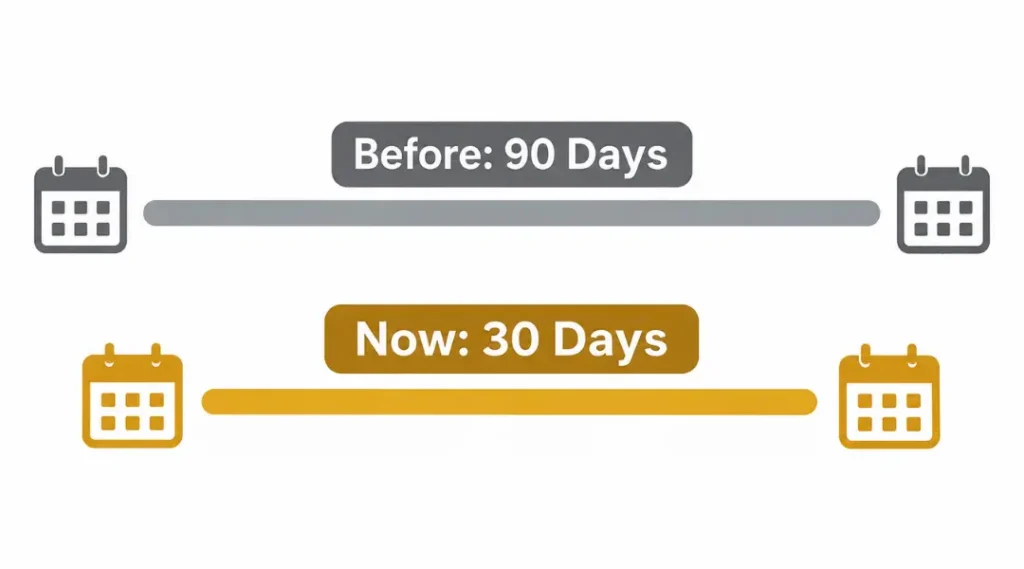
The single biggest change to hit the Umrah visa in the past year is how long you have to actually enter the Kingdom after your visa is issued. That window used to run 90 days. Since October 2025, it’s been cut to 30 days from the date of issuance, not the date you receive the visa or the date you book your flight.
Miss that window and the visa cancels itself automatically; there’s no grace period and no manual override. Once you do cross the border, the stay allowance is unchanged: up to 90 days from your entry date, though seasonal closures ahead of Hajj can override that and force an earlier departure regardless of how many days you have left on paper.
The New Multiple-Entry Umrah Visa
The Ministry of Hajj and Umrah launched a genuinely new visa category on July 20, 2026: a multiple-entry Umrah visa valid for a full 365 days from issuance. It lets a pilgrim enter and exit the Kingdom repeatedly across the year rather than burning a fresh application for every trip. The catch is in how the stay allowance works. The 90-day stay isn’t reset with each entry, it’s a single cumulative balance shared across every visit for the entire 365-day validity.
Every single visit, no matter how short, still requires its own approved Nusuk service package purchased from an approved provider, and the length of that package can’t exceed whatever balance remains from your 90-day total. A pilgrim who spends 40 days on a first trip has 50 days left to split across every remaining visit that year.
The Ministry’s own announcement adds two mechanics worth knowing before you rely on this visa: it deactivates automatically after each departure and only reactivates once you meet the regulatory requirements for your next visit, and it will not activate at all during the Hajj season itself, defined as the period from the 1st of Dhu Al-Qi’dah through the 13th of Dhu Al-Hijjah each year. Plan multi-trip years around that blackout window rather than assuming the visa works continuously.
All Visa Types Now Allow Umrah
A separate but equally important policy shift: the Ministry of Hajj and Umrah confirmed that holders of any valid Saudi visa, not just the dedicated Umrah visa, can perform Umrah while in the Kingdom. This covers personal and family visit visas, the electronic tourist visa, transit visas, and even work visas. In practice, this means a pilgrim doesn’t strictly need to apply for an Umrah-specific visa at all if they’re already eligible for and holding one of these other categories, though they still need to register their Umrah intent and secure an entry permit through Nusuk before stepping inside Masjid al-Haram, regardless of which visa brought them into the country.
Umrah Visa Types Compared
Mandatory Bookings: No Booking, No Visa
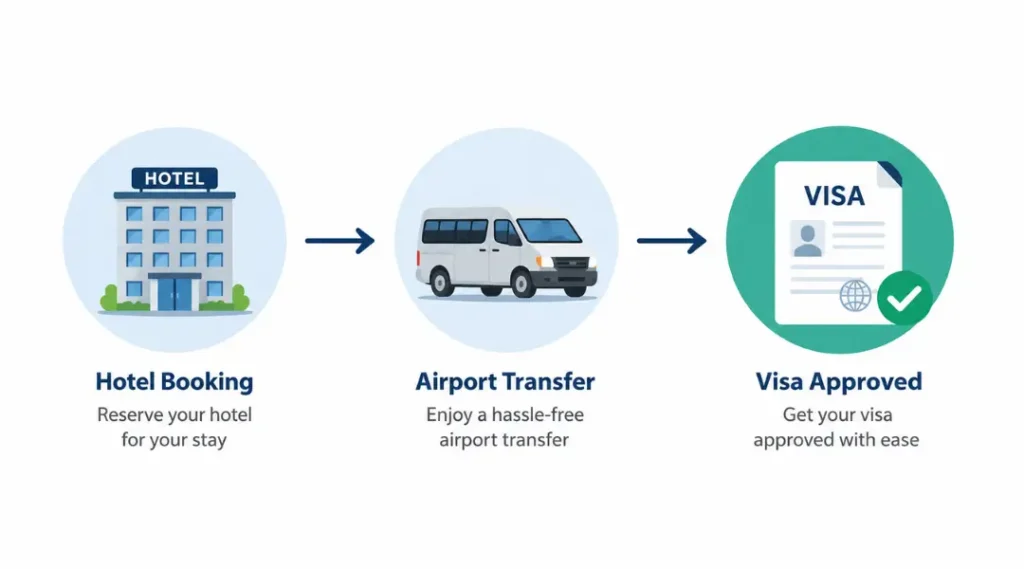
Since the 2026 season tightened enforcement, a Nusuk-linked hotel reservation and pre-booked ground transport aren’t optional extras, they’re conditions of the visa application itself. Before you can even submit an Umrah visa application, the platform requires a confirmed reservation at a Nusuk-approved hotel in Makkah, Madinah, or both, along with pre-booked transport covering your airport arrival transfer, travel between the two holy cities if you’re visiting both, and your departure transfer. Applications submitted without these linked bookings get rejected outright rather than delayed, so this step has to happen before you touch the visa application, not after.
Current Season Dates (1448 AH)
The Ministry of Hajj and Umrah publishes an official calendar for each Umrah season, and the dates shift every year against the Islamic lunar calendar. For the current 1448 AH season, the Ministry set visa issuance and pilgrim arrival to begin May 31, 2026, with Umrah permits through the Nusuk app opening the following day, June 1, 2026. The deadline for issuing new Umrah visas for this season is March 9, 2027, the final date to enter the Kingdom is March 23, 2027, and the final departure date for Umrah performers is April 7, 2027. These dates apply specifically to this season; always check Nusuk or the Ministry’s own channels for the following year’s calendar once it’s published.
Health and Vaccination Requirements

Every pilgrim aged one year and above needs a MenACWY (meningococcal meningitis) vaccination certificate, issued by a recognized health authority at least 10 days before arrival. The certificate stays valid for up to five years if you received the conjugate vaccine, or three years for the polysaccharide version. Travelers arriving from countries where polio remains endemic may face an additional vaccination requirement on top of that. Mandatory medical insurance is typically bundled into the visa fee itself rather than purchased separately, and it’s non-negotiable regardless of any personal travel insurance you already carry.
How to Apply for an Umrah Visa Through Nusuk
- Confirm your route first. Check whether your nationality qualifies for direct Nusuk access or whether you need to go through a licensed agent, since this determines every step that follows.
- Book your Nusuk-linked hotel and transport before applying. Reserve accommodation in Makkah and/or Madinah through a Nusuk-approved provider, plus airport and intercity transport, since the visa application won’t process without these confirmed.
- Get your MenACWY vaccination certificate. Complete this at least 10 days before your planned travel date and keep the digital or physical certificate ready to upload.
- Submit your application on Nusuk (or through your agent). Enter your passport details exactly as they appear on your document, upload your photo, vaccination certificate, and linked booking confirmations, then pay the visa and insurance fee.
- Receive your eVisa and register the trip on the Nusuk app. Once approved, download the Nusuk app to manage your Umrah permit, Masjid al-Haram entry slots, and any Rawdah reservation in Madinah ahead of arrival.
- Track your entry and stay windows carefully. Note your 30-day entry deadline and your stay allowance the moment your visa is issued, and set your own reminders rather than relying on memory.
What Happens If Your Nationality Isn’t Nusuk-Eligible
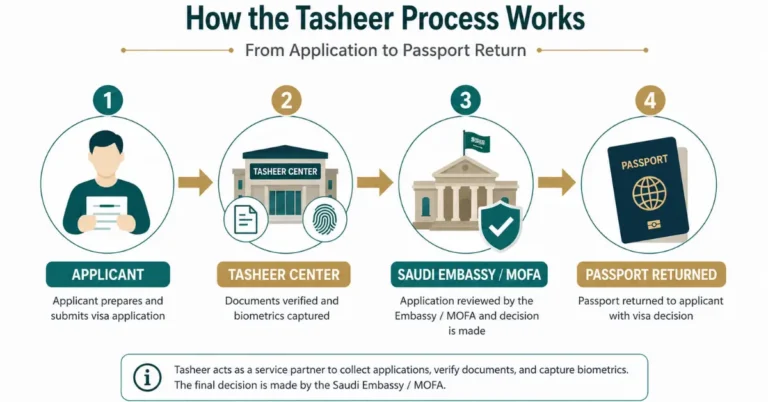
For pilgrims from countries outside the direct eVisa list, the process runs through a licensed Umrah travel agency instead of a personal Nusuk account. In practice, this usually means going through channels similar to how nationalities outside the Saudi eVisa list apply through Tasheer’s visa service centers for other visa categories, since Umrah is one of the visa types processed this way for ineligible nationalities.
The agent handles the visa filing, the Nusuk-linked hotel and transport bookings, and the insurance on your behalf, though you’re still the one responsible for supplying accurate passport details, vaccination proof, and photographs. It’s also worth remembering that this entire process is separate from employment-related travel; an Umrah visa carries no work rights whatsoever, unlike Saudi Arabia’s employer-sponsored work visa, which follows a completely different sponsorship and application chain through Qiwa.
Frequently Asked Questions
How long is an Umrah visa valid in 2026?
A standard single-entry Umrah visa gives you 30 days from issuance to enter Saudi Arabia, then up to 90 days to stay once you’ve crossed the border. The new multiple-entry version runs for 365 days from issuance and allows repeated entries, but the 90-day stay allowance is shared across every visit rather than resetting each time.
Can I still get an Umrah visa if my hotel and transport aren’t booked yet?
No. Since the 2026 season, Nusuk requires a confirmed hotel reservation and pre-booked ground transport linked to your application before it will process. Applications without these bookings are rejected rather than held pending.
Does the multiple-entry Umrah visa reset my 90 days after each trip?
No, and this is the most commonly misunderstood part of the new visa. The 90-day stay is a cumulative total shared across all visits within the 365-day validity, not a fresh allowance for every entry. Each visit still requires its own Nusuk service package and Umrah permit, and that package can’t exceed your remaining balance.
Can I perform Umrah on a tourist visa instead of a dedicated Umrah visa?
Yes. The Ministry of Hajj and Umrah confirmed that holders of any valid Saudi visa can perform Umrah, including the tourist eVisa, personal and family visit visas, transit visas, and work visas, not only the dedicated Umrah visa. You’ll still need to book your Umrah permit through Nusuk before entering Masjid al-Haram, regardless of which visa got you into the country.
Does the multiple-entry Umrah visa work during Hajj season?
No. The Ministry’s own announcement specifies that the multiple-entry visa will not activate during the Hajj season, defined as the period from the 1st of Dhu Al-Qi’dah through the 13th of Dhu Al-Hijjah each year. The visa also deactivates after every departure and only reactivates once you meet the requirements for your next visit.
What happens if I don’t enter Saudi Arabia within the 30-day window?
The visa cancels automatically. There’s no manual extension or grace period built into the system, so a fresh application is the only way forward if you miss the entry deadline.
Is the MenACWY vaccine really mandatory, or just recommended?
It’s mandatory for every pilgrim aged one year and above, not optional. The certificate needs to be issued at least 10 days before arrival, and immigration and Nusuk verification checks for it as part of the standard entry process.
Note: Umrah visa fees, entry windows, and vaccination requirements are revised periodically by the Ministry of Hajj and Umrah. Always confirm current figures and season-specific deadlines directly through the official Nusuk platform before booking travel.