
Qatar Work Visa 2026: Complete Guide to Requirements, Process, and the New Labour Law
Doha’s skyline keeps growing, and so does the number of foreign professionals arriving to work there every year. But the Qatar work visa system in 2026 looks different from what it did even a few years ago. A sweeping labour law overhaul just came into force, changing how contracts, job mobility, and worker protections function across the country. If you’re planning to work in Qatar, or you’re an employer bringing someone in, understanding both the visa process and these fresh legal changes matters more than ever. This guide walks through exactly how the system works right now.
Who Needs a Qatar Work Visa
Any non-Qatari, non-GCC national who wants to take up paid employment in Qatar needs a Qatar work visa. It sits alongside tourist, family, and transit permits as one of the core categories covered in our broader Qatar visa guide, but it works very differently from the others. Like most of the Gulf, Qatar operates on a sponsorship-based system: a licensed Qatari employer must sponsor the application before anything else happens. You cannot walk into the country on a tourist visa and start working, and there’s no independent, self-sponsored route into standard employment. The employer, officially your sponsor, initiates the process with the Ministry of Interior (MOI) and coordinates with the Ministry of Labour on the employment side.
From Kafala to a Contract-Based System
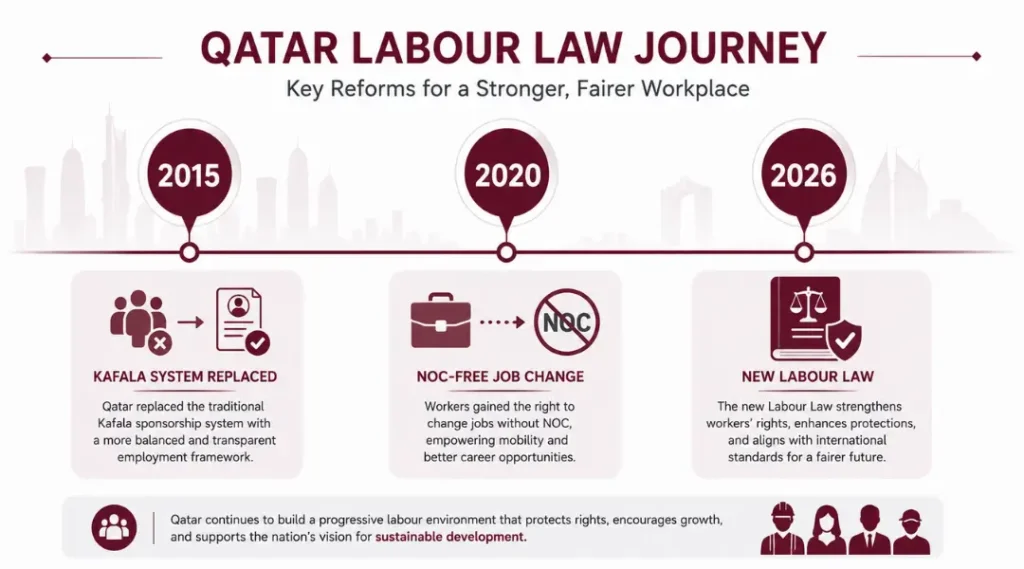
Qatar’s employment framework has moved a long way from the traditional kafala sponsorship model most people associate with Gulf labour markets. Law No. 21 of 2015 first replaced the old kafala structure with a contract-based system, guaranteeing freedom of movement and clearer entry, exit, and residency rules for foreign workers. In 2020, two separate laws pushed reform further: Law No. 18 of 2020 removed the requirement for a No Objection Certificate (NOC), letting workers change employers before their contract ended, while Law No. 17 of 2020 introduced Qatar’s first non-discriminatory minimum wage, applied to every worker regardless of nationality or sector.
These reforms didn’t eliminate sponsorship entirely, your legal status is still tied to an employer, but they removed much of the rigidity that once defined the system.
The 2026 Labour Law Changes You Should Know
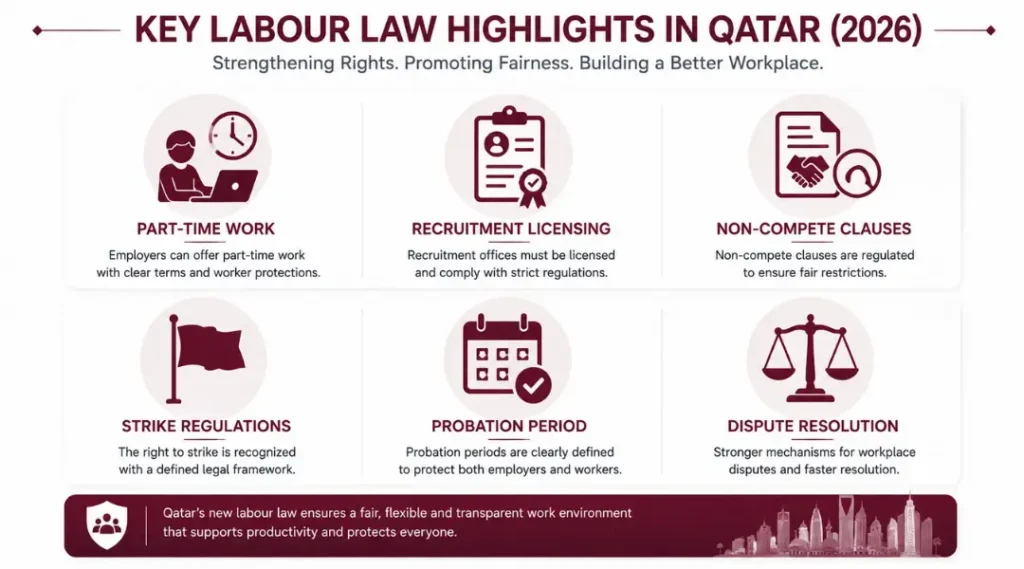
Qatar Law No. 9 of 2026 entered into force after its publication in the official gazette on June 25, 2026, introducing the most significant update to the country’s Labour Law since the 2020 reforms. Anyone applying for or currently holding a Qatar work visa should understand what changed:
- Part-time and freelance work is now formally defined as a category in the law, but it’s not automatically protected. The Labour Law explicitly excludes part-time and freelance workers from its standard protections for now, though the Council of Ministers can extend some or all of these protections to them later, based on a recommendation from the Minister of Labour. In other words, the category exists on paper, but the safety net around it is still a work in progress.
- Non-compete clauses can now last up to two years, doubled from the previous one-year limit. This restores a longer standard that existed before 2020 and removes the old sector-specific cap. If your role gives you access to sensitive client information or trade secrets, your employer can restrict you from joining a competitor for up to two years after you leave, though the clause only holds up if the Ministry of Labour approves it, and it becomes void automatically if your employment ends during probation.
- Recruitment offices face stricter licensing requirements and steeper penalties for non-compliance, aimed at reducing exploitative or unlicensed hiring practices.
- A new vocational certification requirement (Article 23 bis) means workers in designated trade professions must obtain a training and examination certificate from a Ministry of Labour-accredited centre before starting work. The Ministry will publish the full list of covered professions.
- The right to strike hasn’t changed, but it’s now a lot harder to actually use it. Qatar’s Labour Law already recognised the right to strike before this update. What’s new is the structure around it: a strike is only lawful after a formal dispute with your employer goes unresolved through negotiation or mediation, both your employer and the Ministry of Labour need written notice, and the strike itself is capped at six working days, unpaid, and confined to the workplace or worker accommodation. Employers can also bring in temporary replacement workers with Ministry approval, and certain “vital facilities” remain off-limits to strikes altogether.
- Larger companies now need joint worker-management committees. Establishments with 100 or more employees must set up these committees, a threshold that used to be optional starting at just 30 workers.
- Labour dispute resolution has been streamlined through expanded mediation, digital case processing, and enforceable decisions from labour dispute committees.
These changes affect the employment relationship itself rather than the visa application steps, but since your work visa and residence permit are directly tied to a valid, registered employment contract, they shape what that contract can legally include.
Qatar Work Visa vs. Work Residence Permit: What’s the Difference
How the Qatar Work Visa Process Works
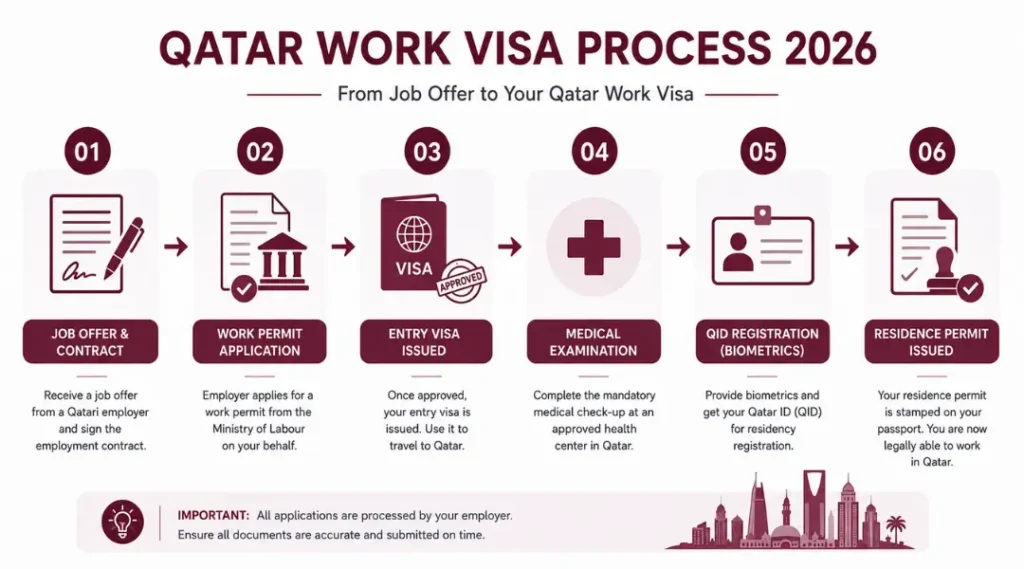
- Secure a job offer from a licensed Qatari employer: The entire process starts here, no employer sponsorship means no visa pathway.
- The employer registers the contract and applies through MOI: The company submits your passport details, job information, and supporting documents to the Ministry of Interior to request visa authorization.
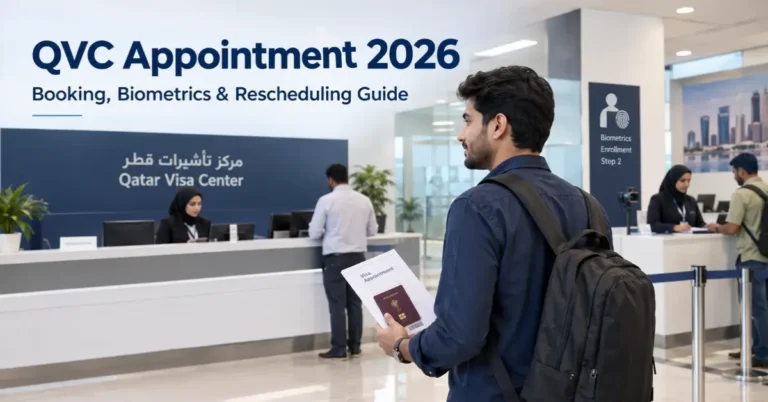
- Complete biometrics, medical screening, and contract signing abroad: For applicants in countries served by the Qatar Visa Center (QVC), including India, Pakistan, Bangladesh, Nepal, Sri Lanka, and the Philippines, next step is usually to book a QVC appointment for biometrics, medical screening and document verification.
- Travel to Qatar on the approved entry visa: Once authorization comes through, you can enter the country using the visa issued in your passport.
- Complete an in-country medical exam: A local medical fitness check is required before residency processing can move forward.
- Receive your Qatar ID (QID): Once your Qatar ID is issued, you can also use the official Qatar ID check service to verify its recorded expiry date. This is your work residence permit and primary form of identification for the duration of your employment. Once you have it, one of the first things worth sorting out is your Qatar health card registration, since it’s a separate step from your QID and is needed before you can book most PHCC medical appointments as a resident. If you’re planning to bring your family to Qatar long-term rather than just visit, your active QID is also the starting point for a Qatar Family Residence Visa.
What You’ll Typically Need
- A valid passport, generally with at least six months of remaining validity
- A signed employment contract registered with the Ministry of Labour
- Educational certificates or professional qualifications relevant to your role
- A medical fitness certificate from an approved facility
- Passport-style photographs
- A vocational training certificate, where your profession falls under Article 23 bis of the 2026 labour law
Frequently Asked Questions
Can I apply for a Qatar work visa without a job offer?
No. A Qatar work visa requires sponsorship from a licensed Qatari employer. There is no self-sponsored or independent pathway into standard employment, regardless of your qualifications.
What’s the difference between a work visa and a QID?
The work visa is what gets you into the country initially. The Qatar ID (QID) is the residence permit you receive after arriving, completing your medical exam, and finishing registration, it’s what allows you to legally live and work in Qatar going forward and needs annual renewal by your employer.
Can I change employers on a Qatar work visa?
Since the 2020 reforms, workers have generally been able to move to a new employer without needing a No Objection Certificate, provided proper notice requirements are followed. The 2026 labour law changes focus more on contract terms, probation limits, and dispute resolution rather than reversing this mobility.
Does the 2026 labour law affect visa applications directly?
The 2026 changes primarily reshape the employment contract itself, covering things like probation limits, non-compete enforceability, and vocational certification, rather than the visa application steps. Since your residence permit depends on a valid registered contract, though, these terms indirectly shape what you’re agreeing to when you take a job in Qatar.
Note: Visa and QID status can be checked through the official Ministry of Interior portal or the Metrash2 app, both of which provide real-time updates using your passport or visa number. If you applied through a Qatar Visa Center abroad, such as in India, Pakistan, Bangladesh, Nepal, Sri Lanka, or the Philippines, our Qatar visa check guide walks through both the MOI and QVC tracking methods step by step, including what an “Under Outside Process” status actually means. Always verify current fees and procedural requirements through Hukoomi, Qatar’s official e-government portal, since specific fees and steps are subject to change.


One Comment