Saudi Work Visa 2026: Complete Guide to Requirements, Fees, and the Qiwa Process
Finding a job in Saudi Arabia is often the easy part. What actually determines whether you land in Riyadh or Jeddah with a valid Iqama in hand is how well your employer navigates the Saudi work visa system, and that system looks nothing like it did even three years ago. Between the 2025 skill-based classification overhaul and the Qiwa platform now sitting at the center of every step, an outdated guide can send you chasing requirements that no longer apply. This article breaks down exactly how the process works in 2026, what it costs, and what happens between your job offer and your first day at work.
What Is Qiwa?
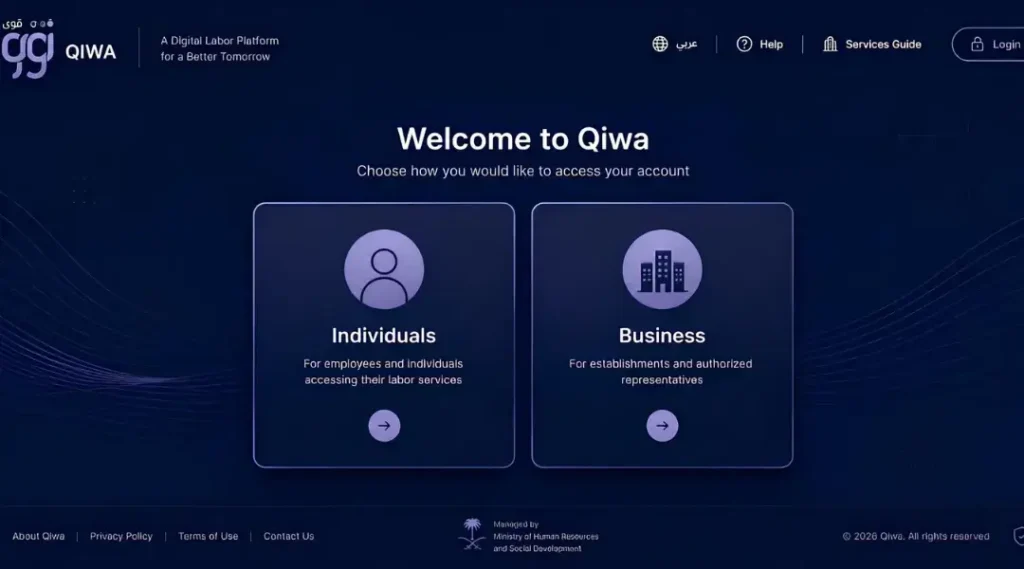
Every step of the Saudi work visa process runs through one platform: Qiwa. It’s the Ministry of Human Resources and Social Development’s official digital labor system, built to handle everything from employment contracts and visa authorizations to Nitaqat compliance and worker classification. Employers use a dedicated Business account to manage hiring and visa requests, while employees use an Individuals account to track their own labor status. Understanding this distinction matters early on, since almost every requirement covered in this guide traces back to something happening on Qiwa.
Who Actually Needs a Saudi Work Visa
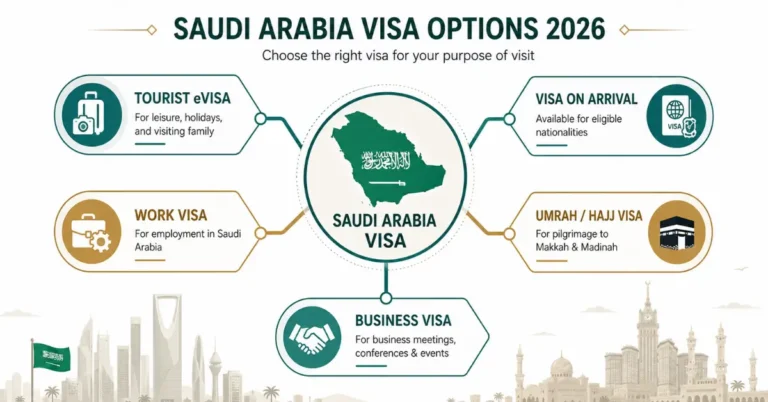
Anyone who isn’t a Saudi or GCC national and wants to take up paid employment in the Kingdom needs a Saudi work visa. This is separate from tourism entirely; the tourist eVisa covered under the Kingdom’s broader Saudi Arabia visa system explicitly excludes employment, and there’s no way to convert a visit visa into work authorization once you’re inside the country. A work visa can only be requested by a Saudi-registered company on your behalf, you cannot initiate or sponsor your own application as a foreign worker, regardless of your qualifications or nationality. This is separate from religious travel too, an Umrah visa carries no employment rights of any kind.
The Two Categories of Saudi Work Visa
Not every employment situation calls for the same visa. Saudi Arabia’s Ministry of Human Resources and Social Development, through the Qiwa platform, issues work authorization under two distinct tracks:
- Temporary Work Visa: Built for short-term contracts of three months or less, commonly used for project-based technical work, equipment installation, or short consultancy assignments. It doesn’t lead to an Iqama or residency status.
- Permanent (Employment) Work Visa: The standard route for long-term hiring, used when a company brings on a foreign employee for more than three months. This is the visa that eventually converts into an Iqama after arrival.
The Skill-Based Classification System
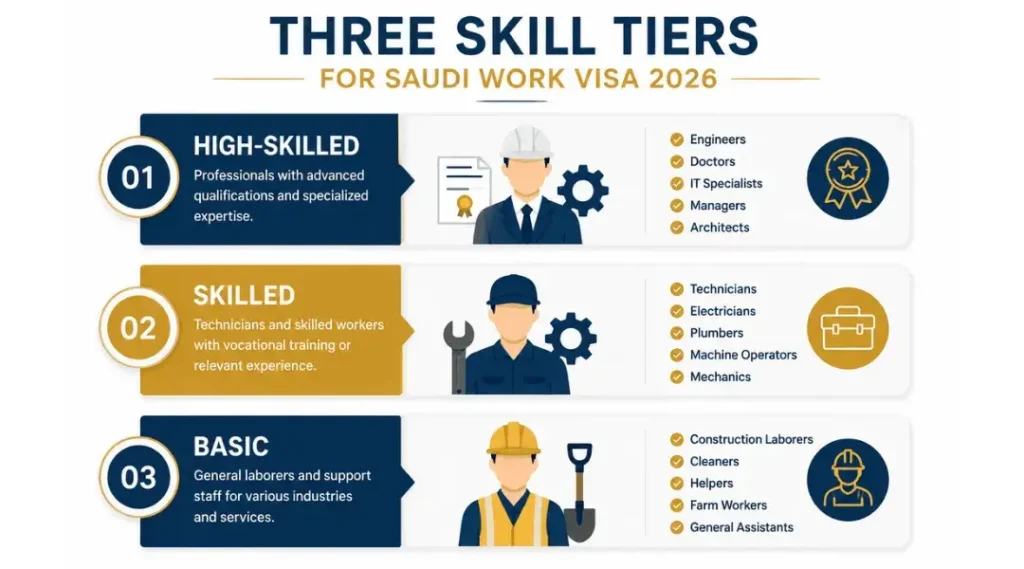
Since August 3, 2025, every new Saudi work visa application for workers entering the Kingdom has been screened under a mandatory skill-based classification system introduced by Ministerial Resolution No. 4602. Existing foreign workers already employed in the Kingdom began being reclassified starting July 5, 2025. Under this framework, every position is sorted into one of three tiers:
- High-Skilled: Roles requiring advanced qualifications, technical expertise, and typically higher wages, engineers, doctors, IT specialists, and senior executives fall here.
- Skilled: Positions requiring recognized trade or vocational competency.
- Basic: Entry-level and manual labor roles.
The classification is calculated through a points-based evaluation covering education, professional experience, technical skill, wage level, and age, run through the Qiwa platform and aligned with the Unified Saudi Classification of Professions. The Ministry has built in flexibility here: an applicant lacking formal educational credentials can still qualify for a higher tier if their hands-on experience earns enough points elsewhere. Employers are required to correctly classify each hire on Qiwa, since job title, salary, and qualifications now all need to match what’s recorded on the system.
Saudi Work Visa: Types, Validity, and Purpose at a Glance
How the Saudi Work Visa Process Actually Works
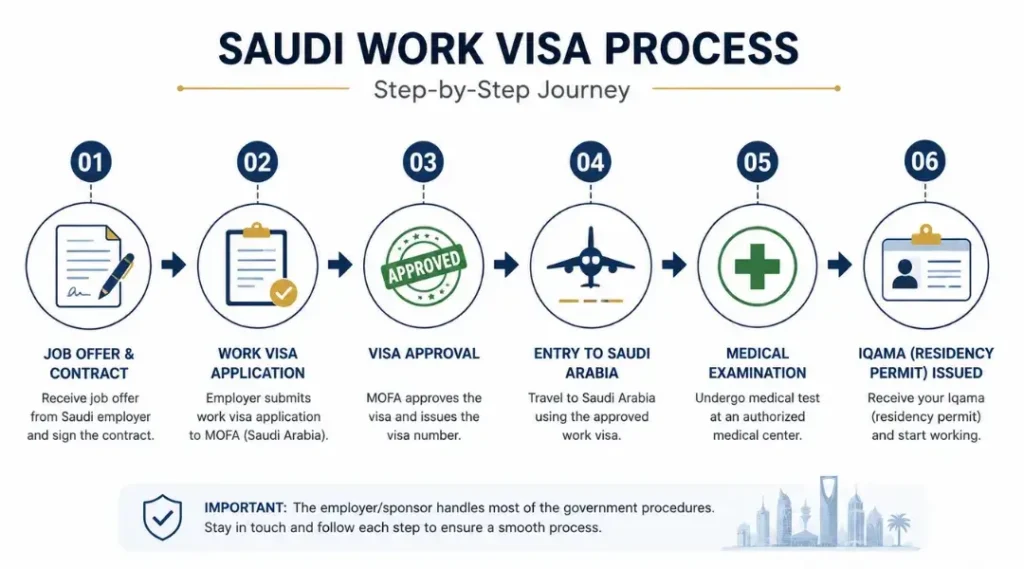
The entire journey runs through the employer first, and the worker’s role only begins partway through:
- The employer creates the job offer and contract on Qiwa. The Saudi company drafts the employment terms, salary, job title, and role classification directly on the Qiwa platform; this digital contract is what the entire visa chain is built on.
- The employer checks visa quota and Nitaqat status. Whether a company can issue a new work visa at all depends on its Nitaqat (Saudization) band and available recruitment quota. Companies with low Saudi-national ratios face restrictions here.
- The employer requests visa authorization through Qiwa. Once the quota is confirmed, the employer submits the visa request, specifying the worker’s occupation, nationality, and other details, and pays the applicable government fee.
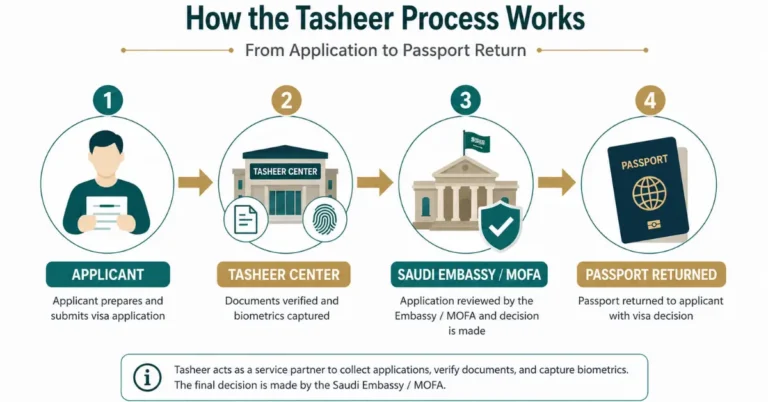
- Worker applies for visa stamping at a Saudi embassy or consulate. With the authorization issued, the employee takes their passport, employment contract, and supporting documents to the nearest Saudi diplomatic mission for the entry visa to be stamped, a step processed through Tasheer’s official visa service centers for most applicants, since Tasheer handles work visa documentation and biometrics on MOFA’s behalf.
- The worker travels to Saudi Arabia and completes a medical exam. On arrival, a medical fitness check at an approved facility is required before residency processing can continue.
- Iqama is issued. Once medical clearance and biometrics are complete, the Ministry finalizes the residency permit, the Iqama, which serves as the worker’s legal ID and proof of employment authorization for the length of the contract.
Saudi Work Visa Requirements
Regardless of skill tier or visa type, most applications need:
- A passport valid for at least six months beyond the travel date
- A signed employment contract documented on Qiwa
- Educational certificates and professional qualifications relevant to the classified skill tier
- A medical fitness certificate from an approved facility
- Recent passport-style photographs
- Correct occupational classification matching the actual job role, since mismatches between a worker’s registered profession and real duties can trigger compliance issues down the line
What Happens After You Have the Iqama
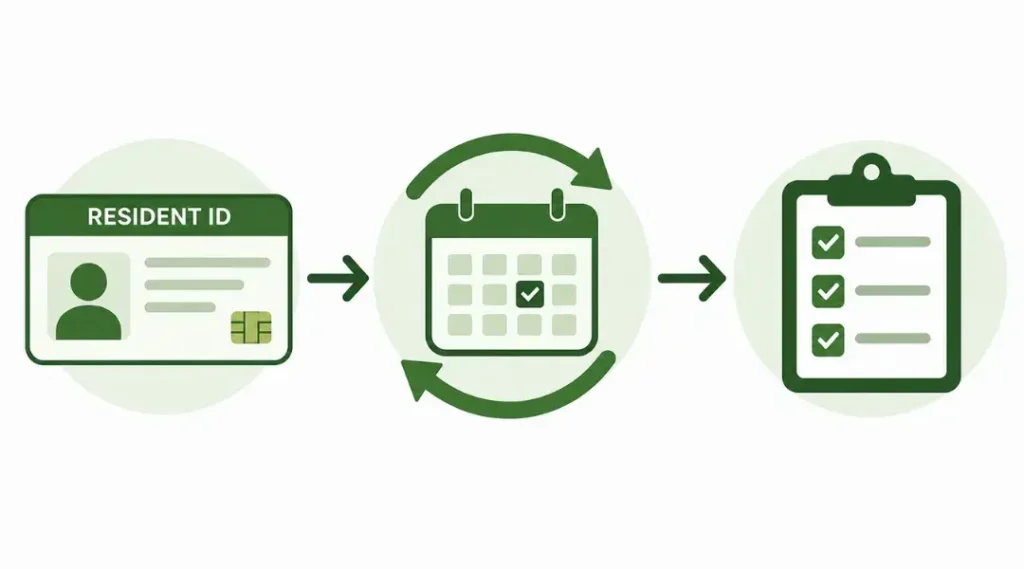
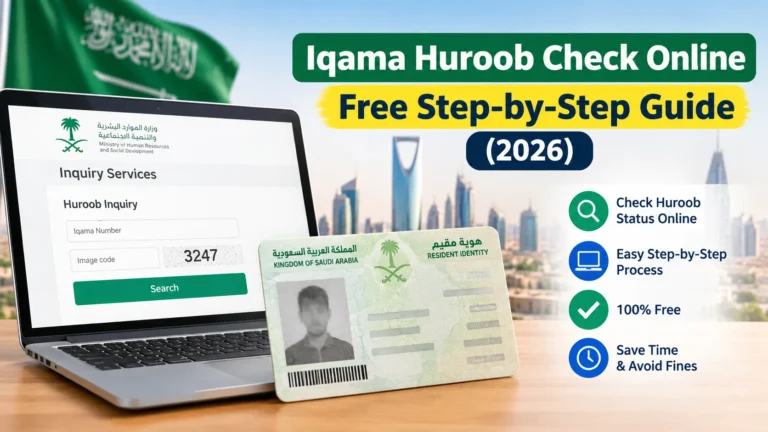
Holding an Iqama isn’t the end of the compliance chain, it needs to stay accurate for as long as you’re employed. The listed profession must match your actual role, your employer is responsible for renewing your work permit annually through Qiwa, and any change in job title or sponsor requires an update on the same platform. Falling out of sync with these records, even unintentionally, can delay renewals or restrict services like exit and re-entry permits. For the new 5-year physical card and how digital Iqama renewal actually works in 2026, see our Saudi Iqama guide
Frequently Asked Questions
Can I apply for a Saudi work visa myself without a job offer?
No. A Saudi work visa can only be initiated by a Saudi-registered employer through the Qiwa platform. There is no independent or self-sponsored route into standard employment, regardless of your profession or experience level.
What’s the difference between a work visa and an Iqama?
The work visa is the entry authorization that gets you into the country for employment purposes. The Iqama is the residence permit issued after you arrive, complete your medical exam, and finish biometric registration. It’s what allows you to legally live and work in Saudi Arabia for the duration of your contract.
How does the skill-based classification affect my visa?
Your job role is scored under the high-skilled, skilled, or basic tiers based on education, experience, and wage level. This classification affects eligibility criteria and how your employer must document your position on Qiwa, but it applies to permanent employment visas rather than short-term temporary ones.
Can I switch employers on a Saudi work visa?
Employee mobility between employers is handled through Qiwa, subject to contract terms and Nitaqat-related conditions. It isn’t automatic, and any transfer still needs to go through the platform’s formal process rather than an informal arrangement between employers.
Does a temporary work visa lead to residency?
No. The temporary work visa is designed for short-term contracts of three months or less and does not result in an Iqama. Anyone moving into longer-term employment needs to apply through the permanent (employment) work visa route instead.
Note: Always verify current fees, quota rules, and documentation through the official Qiwa platform or the Ministry of Human Resources and Social Development. Government fees and classification criteria are subject to change, and employers should confirm the latest requirements before initiating any application.