UAE Visa Ban 2026 Countries: What’s Confirmed, What’s Rumor, What to Do
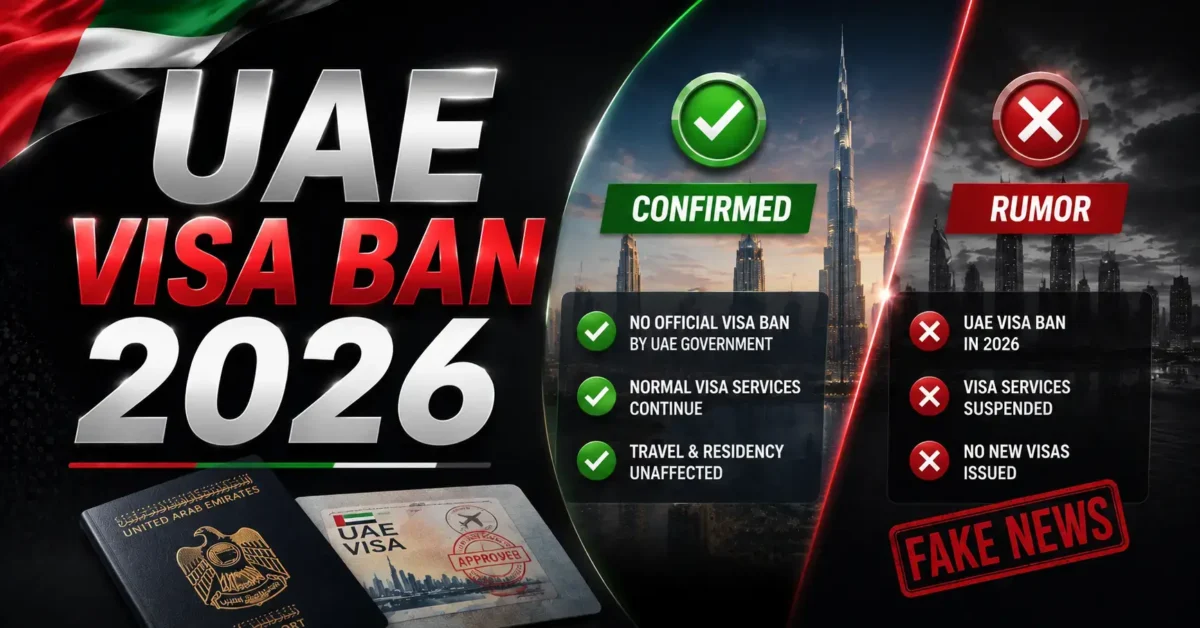
If you’ve searched for UAE visa ban 2026 countries in the past few months, you’ve probably landed on three or four different lists, none of which agree with each other. One post says nine countries are blocked. Another says it’s ten. A WhatsApp forward says your country was added last week. This confusion isn’t your fault, it’s because most of what’s circulating online mixes together two completely different situations: one that the UAE government has officially confirmed in writing, and one that’s based purely on applicant reports and immigration-consultancy chatter.
This guide separates the two clearly, tells you exactly which restriction is real and dated, which one is still unconfirmed rumor, and what to do if you or someone you know falls into either category.
The One Restriction the UAE Has Actually Confirmed
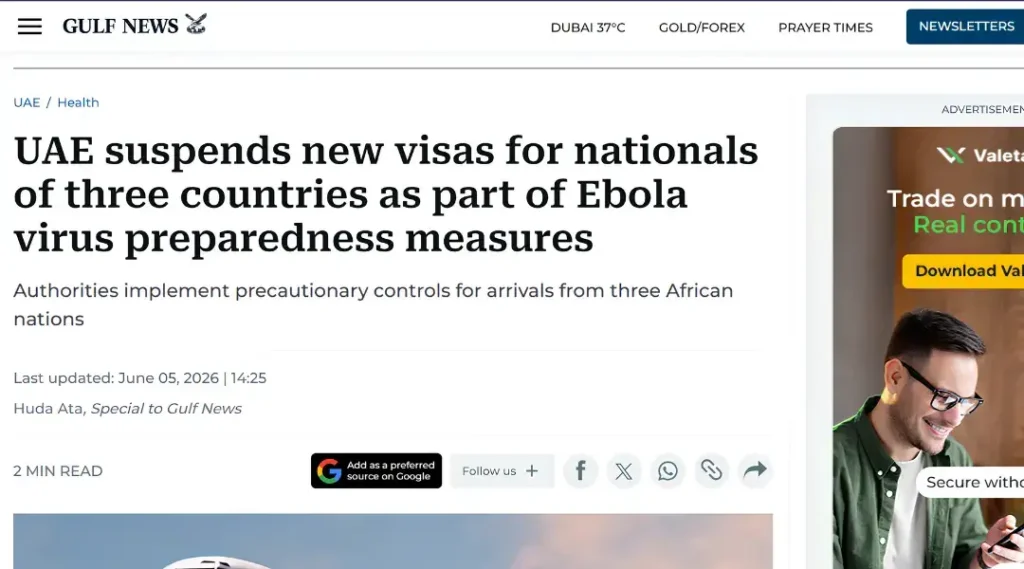
Unlike most of what gets labeled the UAE visa ban 2026 countries list, this part isn’t speculation. On 5 June 2026, the UAE’s National Emergency Crisis and Disaster Management Authority (NCEMA) and the Federal Authority for Identity, Citizenship, Customs and Port Security (ICP) issued a joint statement, reported in detail by Gulf News and several other regional outlets that carried the announcement directly from both authorities.
Starting at 1:00 pm Dubai time on Saturday, 6 June 2026, the UAE suspended the issuance of all new visas including visit visas, for nationals of:
- Democratic Republic of the Congo (DRC)
- Uganda
- South Sudan
The reason is explicitly public health, not immigration policy. It’s a precautionary response to an Ebola outbreak (the Bundibugyo strain) reported in central and east Africa. Alongside the visa freeze, the UAE also closed entry to anyone, of any nationality, who has recently traveled through or transited these three countries, unless they can show they’ve spent more than 21 consecutive days outside all three before arriving in the UAE. Cargo and pure transit flights were specifically excluded from the restriction, so freight and logistics operations kept moving normally.
This is the only entry-related suspension the UAE has put its name on so far in 2026. It’s health-driven, it has a documented start date, and it’s tied to an active outbreak assessment rather than any political or security dispute, which means it can also be lifted the same way once health authorities are satisfied the risk has passed.
The “Nine Countries” Talked About Everywhere Else
This is where most articles covering the UAE visa ban 2026 countries topic get sloppy, they present the second, unofficial situation as if it were confirmed the same way the Ebola measure was. It isn’t.
From around September to October 2025, immigration consultancies in Dubai and Sharjah began flagging a pattern: tourist and work visa applications from a specific group of nationalities were consistently stalling, going unanswered, or coming back rejected at unusually high rates. No press release accompanied this. No embassy issued formal confirmation. What exists instead is a consistent, cross-referenced pattern reported by multiple immigration consultants, applicant testimonials, and regional outlets.
Based on that reporting, the nationalities most frequently named are:
- Afghanistan
- Bangladesh
- Cameroon
- Lebanon
- Libya
- Somalia
- Sudan
- Uganda
- Yemen
A few things worth flagging honestly here. First, sources don’t fully agree on this list, some swap one or two countries in or out. Second, Uganda shows up on both this unofficial list and the officially confirmed Ebola suspension, which itself tells you how much these two separate issues get blended together online. Third, and most importantly for anyone from Pakistan, India, or the Philippines searching this topic out of nervousness: none of the credible reporting places those countries on either list. If you’re not from one of the nationalities above, this particular issue doesn’t currently apply to you.
Confirmed vs. Reported: Side-by-Side Comparison
What This Means If Your Country Is on Either List
If you already hold a valid UAE visa or residence permit and your nationality appears on the Ebola-related list, your status itself isn’t cancelled, but you should not travel to or transit through DRC, Uganda, or South Sudan right now, since re-entry to the UAE would be affected by the 21-day rule regardless of your existing visa. If you’re applying fresh from one of these three countries, new applications simply aren’t being issued at the moment.
If your nationality falls under the reported nine-country group, existing visa holders are not being asked to leave, and current residents can typically still renew through the normal channels. What’s affected is new tourist and work visa applications submitted from outside the UAE, where processing has reportedly slowed to a stop or resulted in rejections without much explanation from agents. Investors and property buyers from these nationalities aren’t excluded either, Golden Visa eligibility runs on separate criteria (investment, salary, or nomination) rather than the standard tourist and work visa channels affected here.
This is the core of what most people mean when they search visa banned countries in uae, even though, as covered above, it isn’t an officially published list. Either way, the practical move is the same: don’t act on a rumor, verify your specific situation before you spend money on flights, agent fees, or documentation.
How to Actually Check Your Status Instead of Guessing
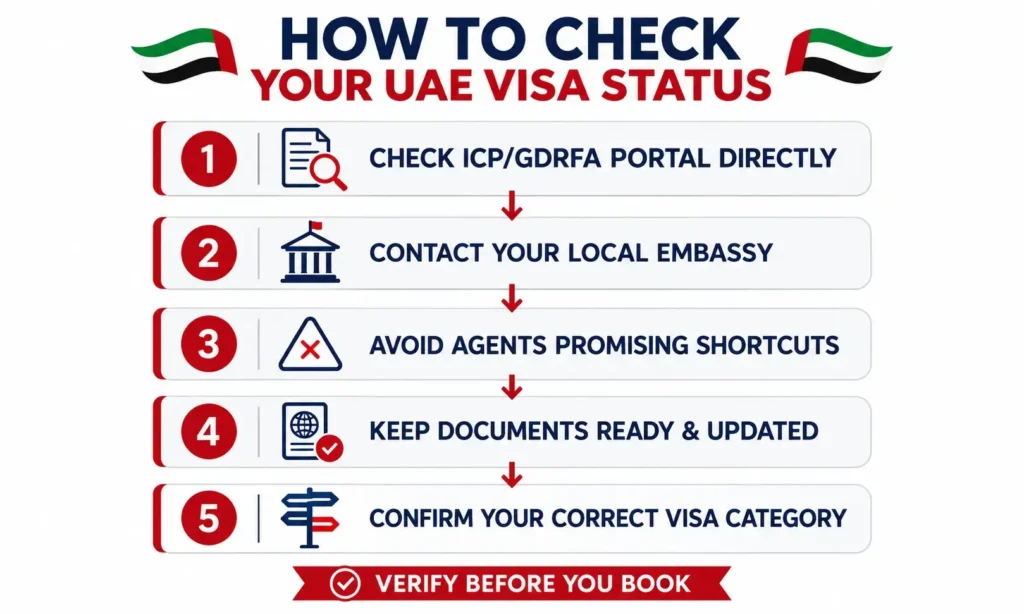
- Check your visa status directly through official channels. The ICP Smart Services platform and, for Dubai specifically, the GDRFA portal, let you check an application or existing visa’s status using your passport or application number rather than relying on what an agent tells you secondhand.
- Contact your local UAE embassy for the Ebola-related suspension. Since this one is government-confirmed, embassies can give you a straight answer on whether it applies to your passport.
- Be skeptical of agents who promise to “get around” a suspension. If a travel agent claims they can push through a new visa for a nationality caught in either restriction, that’s a red flag, not a shortcut.
- Keep your documentation current regardless. If you’re planning to reapply once restrictions ease, make sure your paperwork, including a photo that meets the UAE visa photo size, is ready so you’re not delayed further once applications reopen for your category.
- Understand which visa category you actually need. A lot of confusion around the UAE visa ban 2026 countries topic comes from applicants not knowing whether they even need a tourist visa, a work visa, or qualify for visa-on-arrival in the first place. Our complete UAE visa guide covering every current visa type and the exact application process walks through that before you get anywhere near a suspension question.
Why the Confusion Keeps Spreading
Part of the reason the UAE visa ban 2026 countries search keeps trending is that the UAE, unlike some countries, rarely issues a single consolidated “banned nationalities” list even when it does restrict something. The Ebola measure was announced clearly, by name, with a start date, through a joint statement from NCEMA and ICP that multiple credible regional outlets, including Gulf News, reported and quoted directly.
But informal visa slowdowns tied to security or document-fraud concerns tend to surface only through consultant reports and applicant experiences, not through a public list. That gap gets filled by social media posts, and once something is repeated enough times across Facebook groups and forwarded messages, it starts sounding official even when no government body has confirmed it.
The safest approach is treating any visa ban countries in uae claim, or an older uae visa ban 2025 rumor that’s simply resurfaced with a new year attached, as a lead to verify, not a fact to act on. Cross-check it against your embassy, ICP, or GDRFA directly before changing your travel plans.
Frequently Asked Questions
Is there an official UAE visa ban list for 2026?
No single official list exists. The only government-confirmed restriction covers DRC, Uganda, and South Sudan, and it’s explicitly tied to Ebola precautions, not a general immigration ban. Everything else circulating as a uae visa ban 2026 countries list is based on reported patterns, not an official announcement.
Is Pakistan on the UAE visa ban list?
No. Pakistan doesn’t appear on either the confirmed Ebola-related suspension or the commonly reported nine-country list. If you’ve seen claims about UAE banned Pakistan visa or a supposed UAE ban Pakistan visa situation circulating on social media, that’s not backed by any official statement or credible reporting, Pakistani nationals can continue applying for UAE visas through the standard process.
Is there a UAE visa ban Bangladesh situation specifically?
Bangladesh is one of the nationalities most consistently named in consultant reporting on the unofficial restriction, alongside Afghanistan, Cameroon, Lebanon, Libya, Somalia, Sudan, Uganda, and Yemen. This hasn’t been confirmed by an official UAE statement, but applicants from Bangladesh have reported unusually high rejection rates and stalled processing since late 2025.
Does the UAE visa ban affect people who already have a valid visa or residence permit?
For the Ebola-related suspension, existing visas remain valid, but re-entry after travel through the three affected countries is restricted unless you meet the 21-day rule. For the reported nine-country restriction, existing visa and residence permit holders are not affected; the slowdown applies to new applications only.
How long will these restrictions last?
The Ebola-related suspension is officially described as subject to extension based on the outbreak’s progress, with no fixed end date announced yet. The reported nine-country restriction has been called temporary by immigration consultants, but since it was never officially announced, there’s no confirmed timeline for when it might lift either.
Where can I verify the current status myself instead of relying on this article or others like it?
Use the ICP Smart Services platform or the GDRFA Dubai portal to check an existing application or visa status directly, and contact your nearest UAE embassy for anything related to the Ebola-linked suspension, since that one is the officially confirmed measure.
Note: This article reflects publicly available government statements and consistent reporting as of August 2026. Restrictions, especially the unofficial nine-country pattern, can change without formal notice, so always confirm your specific case through ICP, GDRFA, or your local UAE embassy before making travel or application decisions.