
Qatar Visa 2026: Complete Guide to Entry, Work, and Family Visas
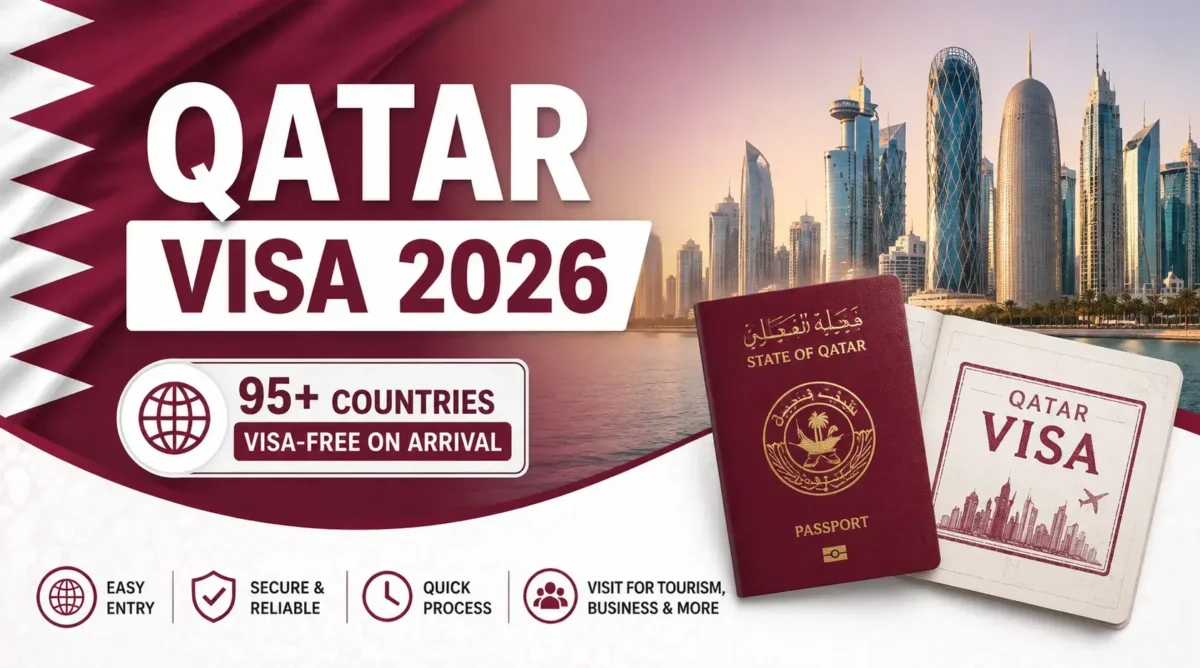
Planning a trip or a move to Qatar starts with sorting out your Qatar visa, and the country runs one of the more open entry systems in the Gulf, with visa-on-arrival access covering citizens of more than 95 countries. This guide breaks down who needs a visa, the main categories available, current fees, and how to apply through Qatar’s official channels.
What Is a Qatar Visa and Who Needs One
Whether you need a Qatar visa at all depends on your passport. GCC citizens, Saudi Arabia, the UAE, Kuwait, Bahrain, and Oman, enter Qatar freely without any visa. Everyone else falls under one of Qatar’s visa categories, managed through the Ministry of Interior (MOI) and its Hayya platform, the official system for tourist and short-term entry permits.
Per Qatar’s Ministry of Interior, citizens of more than 95 countries can enter with a visa on arrival at Qatar’s entry points, no advance application required. Entry under this route requires a passport valid for at least three months, a confirmed onward or return ticket, and compulsory health insurance from a provider registered with Qatar’s Ministry of Public Health.
Core Qatar Visa Categories
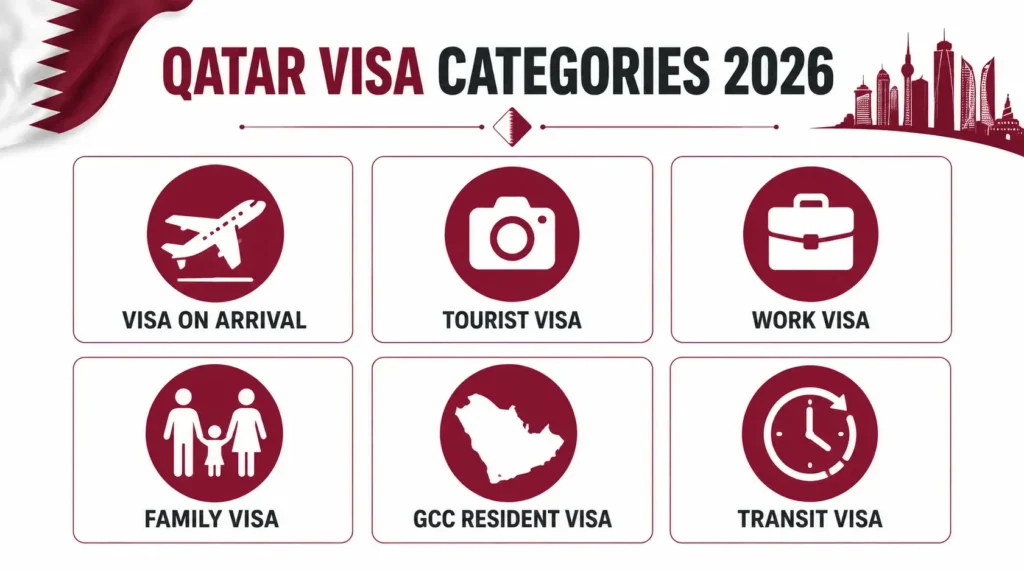
Visa on Arrival / Hayya Entry Visa: covers the 95+ eligible nationalities, issued directly at the airport or arranged in advance through Hayya. The standard visa-on-arrival fee is QAR 100, and validity generally runs 30 days, extendable once for an additional 30 days through the MOI portal before the current visa expires. If you’re only connecting through Doha on a layover rather than visiting Qatar as your final destination, a separate process applies, see our Qatar transit visa guide for the current rules.
Qatar Tourist Visa: for visitors from nationalities outside the visa-on-arrival list, applied for in advance through the Hayya platform or the MOI’s portal.moi.gov.qa, rather than issued on landing. Before you travel, it’s worth confirming exactly what proof of funds and documents immigration may ask for on arrival, our guide to Qatar tourist visa cash and accommodation requirements covers this in detail.
Qatar Work Visa: sponsored entirely by a Qatari employer, who submits the employment contract, educational and professional certificates, medical clearance, and a police clearance certificate on the employee’s behalf. Self-sponsored work visas don’t exist under this system. After arrival, medical testing and biometric registration are required before a Qatar ID (QID) is issued.
Qatar Family Visa: lets residents sponsor immediate family (spouse, children, and in some cases parents) for a visit of 1 to 6 months, subject to a minimum sponsor salary requirement, applied for through the Metrash app.Already have a family visit visa and need more time? See our Qatar visit visa extension guide. For dependants who’ll live in Qatar long-term instead, the separate Qatar Family Residence Visa leads to a Qatar ID (QID).
GCC Resident Visa: a separate route for expatriates legally residing in another GCC country, distinct from the standard tourist or visit visa categories.
Transit Visa: available for travellers passing through Hamad International Airport, allowing a short stay before an onward connection.
Qatar Visa Types at a Glance
How to Apply for a Qatar Visa
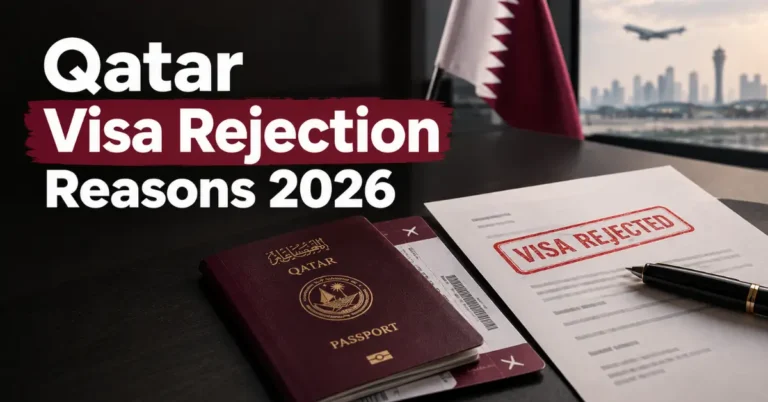
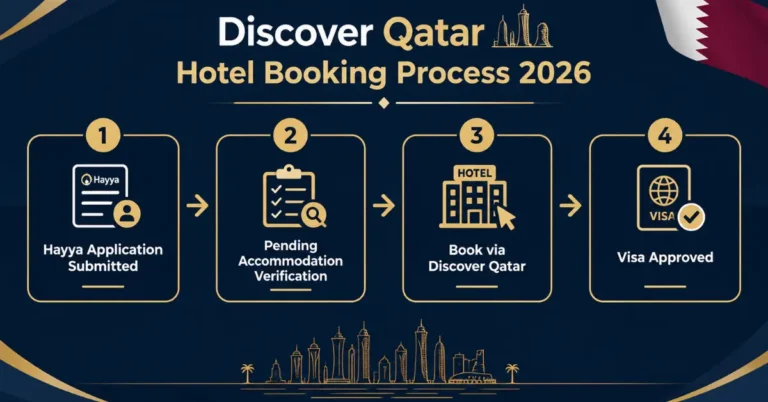
Start by checking your nationality and choosing the appropriate Qatar visa or entry route. For Hayya-based tourist applications, use the official Hayya platform and follow the application requirements shown for your visa type. Once submitted, you can track your application’s progress through our Qatar visa check guide and if it comes back rejected, our Qatar visa rejection reasons guide explains why and what to do next.
Planning to apply for a Tourist Visa (A1)? See our complete Qatar Tourist Visa 2026 guide for A1 eligibility, documents, fees, accommodation requirements, application steps, and what to do after approval.
Frequently Asked Questions
Do I need a visa to visit Qatar?
It depends on your passport. GCC citizens don’t need any visa. Citizens of more than 95 other countries qualify for a visa on arrival, and everyone else needs to apply for a Qatar tourist visa in advance through Hayya or the MOI portal.
How much does a Qatar entry visa cost?
The standard visa-on-arrival fee is QAR 100. Tourist and other visa categories vary by nationality and duration, so confirming the exact fee for your specific category on the official MOI or Hayya platform before applying is worth the extra step.
Can I work in Qatar on a visit or tourist visa?
No. Employment requires a dedicated work visa sponsored by a Qatari employer. Working on a visit or tourist visa is a violation of Qatar’s immigration rules.
How long can I stay in Qatar on a visa on arrival?
Most visa-on-arrival categories allow a 30-day stay, extendable once for an additional 30 days through the MOI portal, provided you apply before the original visa expires.
Is there a separate visa process for GCC residents?
Yes. Expatriates legally residing in another GCC country can apply through a dedicated GCC Resident Visa route, separate from the standard tourist or visit visa categories available to other applicants.
What happens if I overstay my Qatar visa?
Overstaying triggers a daily fine, so applying for an extension before your visa expires, rather than after, is the more reliable way to avoid it.
Note: For the current eligibility list and to apply, use the official Hayya platform or Qatar’s MOI visa services portal.




One Comment