UAE Visa Types Explained: Tourist, Visit, Transit, Work, and Residence Visas
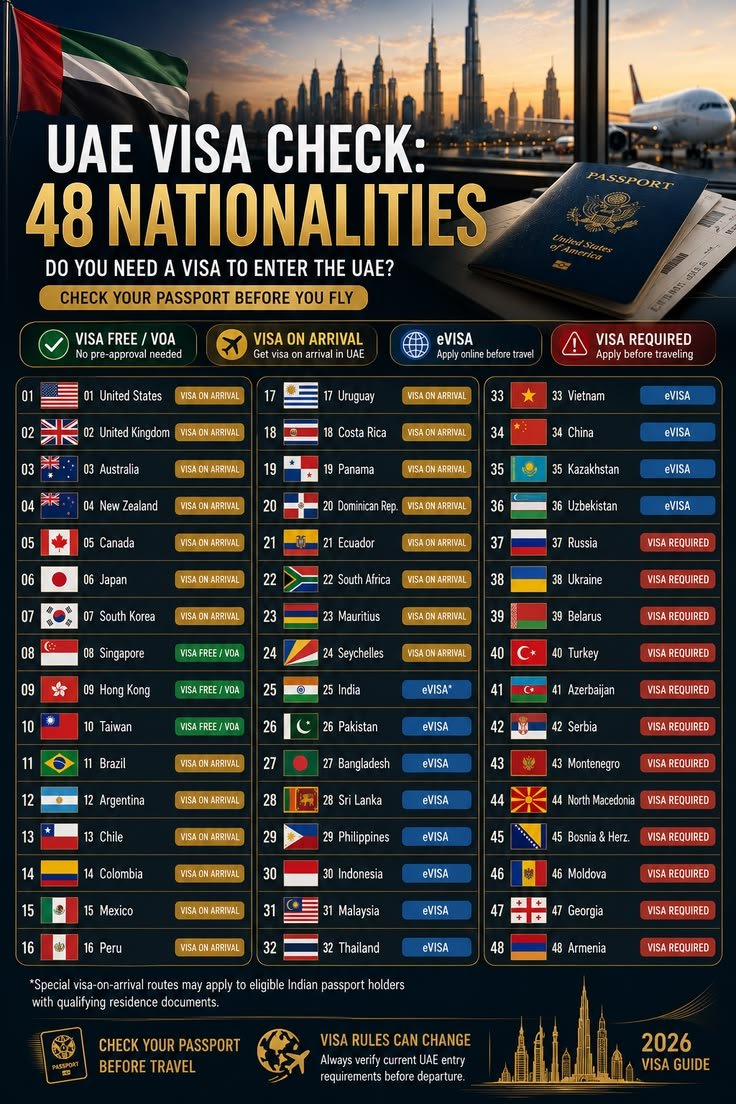
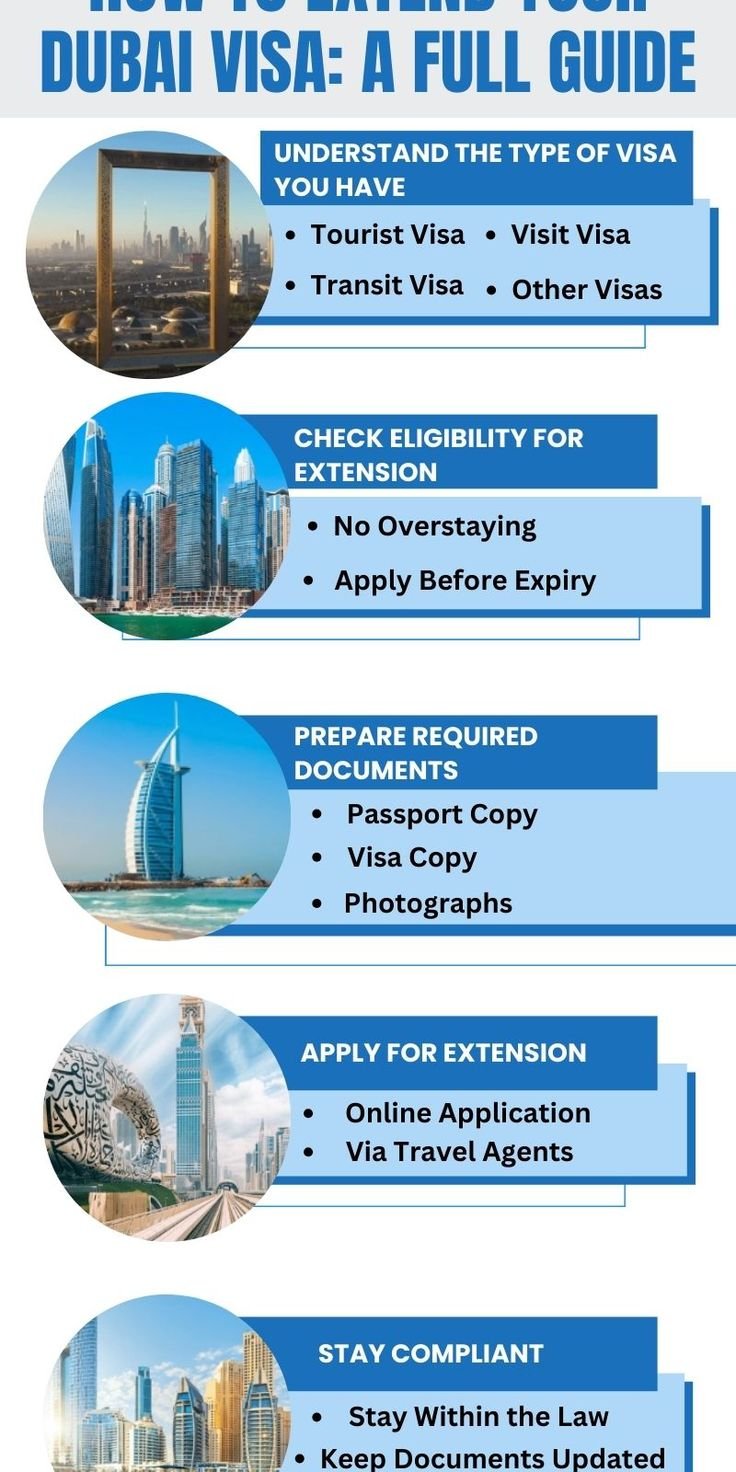
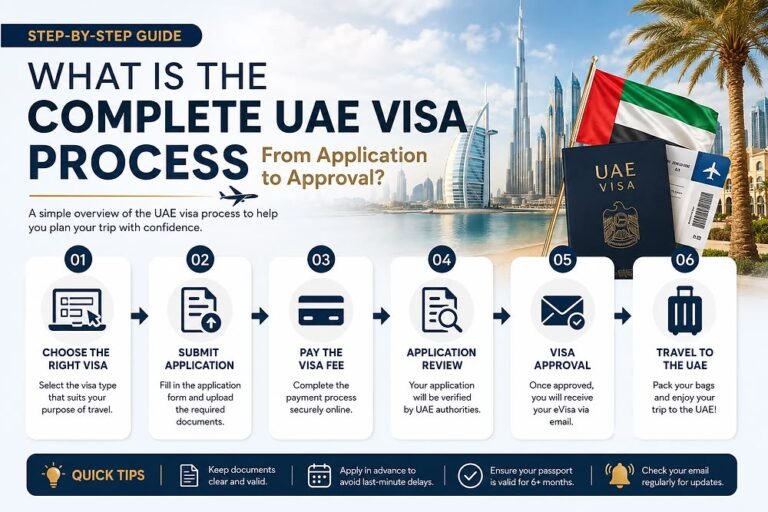
If you are planning to travel to the United Arab Emirates, one of the first things you need to understand is which UAE visa or entry permission applies to you.
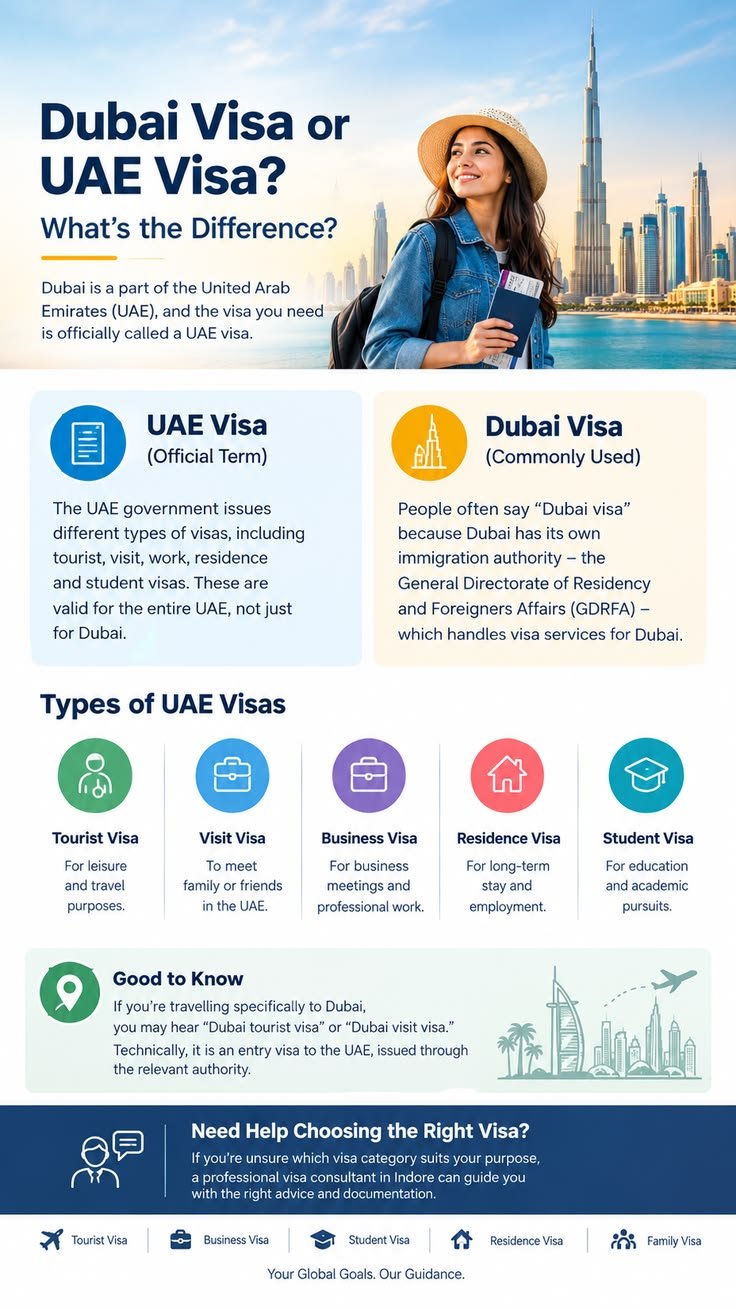
The UAE has several different visa and residence categories. A tourist visiting Dubai for a holiday does not necessarily use the same type of permission as someone visiting relatives, looking for employment, working for a UAE company, studying, or living in the country with their family.
Choosing the correct category is important because each type can have different eligibility requirements, permitted activities, validity periods, sponsors, documents, and conditions.
The UAE Government’s official platform currently lists several categories, including tourist, visit, transit, work, residence, student, investor, Golden, medical and Blue visas.
This guide focuses on the most commonly searched categories and explains what each one is generally used for.
Because UAE immigration rules can change, always check the latest requirements with the relevant UAE authority before applying.
1. UAE Tourist Visa
A UAE tourist visa is generally used by people travelling to the country for tourism and holidays.
If you want to visit destinations such as Dubai, Abu Dhabi, Sharjah or other parts of the UAE for a holiday and your passport does not qualify for visa-free entry or a visa on arrival, you may need to arrange a tourist visa before travelling.
The UAE Government explains that tourist visas are available to travellers who are not eligible for visa-on-arrival or visa-free entry, and applications can be made through authorised channels such as airlines, hotels and travel agents.
Tourist visas can come with different validity and stay arrangements.
For example, the UAE’s official information includes tourist visa options with 30-, 60- and 90-day periods, depending on the relevant visa category.
There is also a five-year multiple-entry tourist visa for eligible applicants. The Federal Authority for Identity, Citizenship, Customs & Port Security states that holders can stay for up to 90 days per visit, subject to the applicable annual limits and conditions.
Who is a tourist visa for?
A tourist visa is generally appropriate if your main purpose is:
- Holiday travel
- Sightseeing
- Visiting attractions
- Short leisure trips
- Tourism-related activities
A tourist visa should not be treated as a general permission to work in the UAE.
If you intend to take employment, you should investigate the appropriate work and residence arrangements instead.
2. UAE Visit Visa
A visit visa is a broader category that can cover particular reasons for visiting the UAE beyond ordinary tourism.
The official UAE Government portal lists visit visa categories including visas for exploring investment opportunities and jobseeker visit visas.
Visit-related entry permissions may also apply to people visiting family or friends, depending on the specific category and sponsorship arrangements.
This distinction is important because people often use the terms “tourist visa” and “visit visa” interchangeably.
They are not necessarily the same thing.
The appropriate category depends on why you are travelling and the conditions attached to the visa.
For example, someone travelling to the UAE specifically to explore employment opportunities may need to investigate a jobseeker or other appropriate visit category rather than simply applying for a tourist visa.
Similarly, someone visiting relatives may have different requirements depending on their circumstances and the available family or visit visa route.
3. UAE Transit Visa
A transit visa is designed for certain travellers who are passing through the UAE and want or need to enter the country temporarily during their journey.
The UAE Government states that it issues transit visas for 48 hours or 96 hours. These visas are sponsored by UAE-based airlines and need to be processed and approved before entering the UAE.
This can be useful for passengers who have a sufficiently long connection and want to leave the airport during their stopover, where permitted.
However, not every passenger with a connecting flight necessarily needs a transit visa.
Whether you need one can depend on your nationality, travel arrangements, whether you intend to leave the airport and the applicable entry rules.
Before travelling, check the requirements for your passport and itinerary.
Transit visa versus tourist visa
The main difference is the purpose and duration of the trip.
A tourist visa is intended for tourism, while a transit visa is designed for a short stopover while travelling onward.
If you’re planning to spend several days exploring the UAE as the main purpose of your journey, a tourist visa may be more appropriate if you require advance entry permission.
4. UAE Work Visa
A UAE work visa is relevant to people who are coming to the UAE for employment.
This is very different from a tourist visa.
The UAE Government explains that the standard work visa applies to employees in government and private-sector organisations, while other work-related residence options also exist.
A typical employment process can involve several stages, including an employment offer, work permit arrangements and residence procedures.
The exact process can depend on the employer, sector, nationality, job and applicable UAE regulations.
One important point for job seekers is that you should not assume a tourist visa gives you permission to work.
If a company offers you a job while you are in the UAE, the employer should follow the appropriate legal process for employing you.
Be cautious if someone asks you to work illegally or tells you that a tourist visa is sufficient for employment.
5. UAE Residence Visa
A residence visa or residence permit is intended for eligible foreign nationals who have a lawful basis to live in the UAE for an extended period.
The UAE Government lists several residence categories, including residence arrangements for families of employees, university students, retirees and people working outside the UAE.
Residence status can be linked to different circumstances.
For example, a person may qualify through:
- Employment
- Family sponsorship
- Investment
- Education
- Retirement
- Certain specialist or long-term residence programmes
The requirements depend on the specific route.
Residence is fundamentally different from a short tourist visit because it is designed around living in the UAE rather than simply visiting.
6. UAE Golden Visa
The Golden Visa is a long-term residence option for eligible categories of foreign nationals.
The UAE Government describes it as a long-term residence visa that can allow qualifying foreign talents to live, work or study in the UAE while receiving associated benefits. Eligible categories can include investors, entrepreneurs, scientists, outstanding students and graduates, humanitarian pioneers and frontline heroes.
The Golden Visa is therefore not simply another tourist visa.
It is aimed at specific categories of people who meet defined eligibility requirements.
Because eligibility criteria can differ significantly between categories, anyone considering this route should check the current requirements for their particular qualification or status.
7. UAE Green Visa
The Green Visa is another UAE residence option that may be relevant to certain skilled employees and other eligible individuals.
The UAE Government describes the Green Visa as a form of self-sponsored residence for skilled employees, among other qualifying categories.
This makes it different from the standard employment arrangements commonly associated with employer-sponsored residence.
However, meeting the general description of a category does not automatically mean an applicant qualifies.
You need to check the current eligibility requirements, documentation and conditions for the specific Green Visa category.
8. UAE Student Visa
Students who want to study in the UAE may need an appropriate student residence arrangement.
The UAE Government includes student visas among its visa categories.
The process can involve an educational institution and may require documents relating to admission or enrolment.
The requirements can vary depending on the institution and circumstances.
If you are planning to study in the UAE, check both the university or educational institution’s requirements and the applicable immigration requirements.
9. UAE Investor Visa
The UAE also has investor-related visa and residence categories.
These are designed for eligible individuals who have qualifying investments or business interests.
The exact requirements depend on the type of investment, business structure and applicable immigration category.
The UAE’s official platform lists investor visas among its available visa categories.
Do not confuse an investor visa with a tourist visa simply because both can allow a foreign national to enter the country.
An investor or business-related residence route has completely different eligibility requirements and obligations.
10. Medical and Other Special Visa Categories
The UAE also has other visa categories designed for specific purposes.
The official UAE Government portal lists medical visas and Blue Visas alongside other categories.
This demonstrates why it is important to identify your purpose before beginning an application.
If your reason for travelling is unusual or highly specific, don’t automatically choose a tourist visa because it appears to be the easiest option.
There may be a more appropriate category.
UAE Visa Types at a Glance
| Visa Type | General Purpose |
|---|---|
| Tourist Visa | Holidays and tourism |
| Visit Visa | Specific visits and other permitted purposes |
| Transit Visa | Short stopovers while travelling onward |
| Work Visa | Employment in the UAE |
| Residence Visa | Living in the UAE under an eligible basis |
| Golden Visa | Long-term residence for qualifying categories |
| Green Visa | Certain self-sponsored residence categories |
| Student Visa | Study and education |
| Investor Visa | Qualifying investment or business activities |
| Medical Visa | Eligible medical treatment purposes |
This table is a general guide rather than an eligibility checklist. The precise conditions depend on the visa category and the applicant’s circumstances.
How Do You Know Which UAE Visa You Need?
Start with one simple question:
Why are you going to the UAE?
If the answer is “for a holiday,” investigate the tourist visa or applicable visa-free/visa-on-arrival arrangements.
If you’re travelling to visit someone, investigate the relevant visit category.
If you’re passing through the UAE on the way to another country, check whether you qualify for or need a transit visa.
If you’ve accepted a job, you need to understand the appropriate employment and residence process.
If you’re planning to live in the UAE through investment, education, family sponsorship or another qualifying route, investigate the residence category that matches your circumstances.
The purpose of your journey should guide your choice.
What Documents Might You Need?
The documents depend on the visa category.
However, common requirements can include:
- Valid passport
- Passport photograph
- Health insurance where required
- Return or onward ticket
- Accommodation information
- Employment or sponsorship documents
- Proof of relationship for certain family applications
- Educational documents for student applications
- Investment or business documents for relevant categories
The UAE’s ICP service information, for example, lists requirements such as passport validity, health insurance and travel-ticket requirements for relevant entry permits.
Do not assume that a document required for one visa is automatically required for every other visa.
Always use the checklist for your specific application.
Can You Change From One Visa Type to Another?
This is one area where travellers should be particularly careful.
Changing your status or moving from one type of permission to another may be possible in certain circumstances, but the process and eligibility depend on the relevant UAE rules.
You should not assume that you can simply remain in the UAE indefinitely by repeatedly changing visa categories.
If your circumstances change—for example, you enter as a visitor and later receive a job offer—ask the relevant authority or authorised service provider what legal process applies.
Why Choosing the Correct Visa Matters
Using the wrong visa category can create serious problems.
For example, entering as a tourist does not automatically give you the right to work.
Similarly, having a residence visa does not mean you can ignore the conditions attached to your particular residence status.
Before travelling, understand:
- What your visa permits
- How long you can stay
- Whether it allows single or multiple entry
- Whether you need a sponsor
- Whether it can be extended
- What happens when it expires
- Whether you have any restrictions on work or other activities
Understanding these conditions before travelling can help you avoid unnecessary immigration problems.
Final Thoughts
The UAE has a wide range of visa and residence options because people travel to the country for many different reasons.
A tourist visiting Dubai for a holiday, a worker accepting employment in Abu Dhabi, a student attending university, and an investor establishing a business do not necessarily follow the same immigration process.
The easiest way to identify the right category is to begin with your purpose of travel, then check the eligibility requirements that apply to your nationality and circumstances.
Remember that visa rules can change. The UAE Government currently lists tourist, visit, transit, work, residence, student, investor, Golden, medical and other categories, but the conditions attached to each can be updated.
Before applying, always verify the current requirements through the relevant UAE government authority or another authorised channel.
Choosing the correct visa from the beginning can make your travel, work or relocation plans much easier to manage.