Bahrain Work Visa 2026: LMRA Permits, Fees & Process
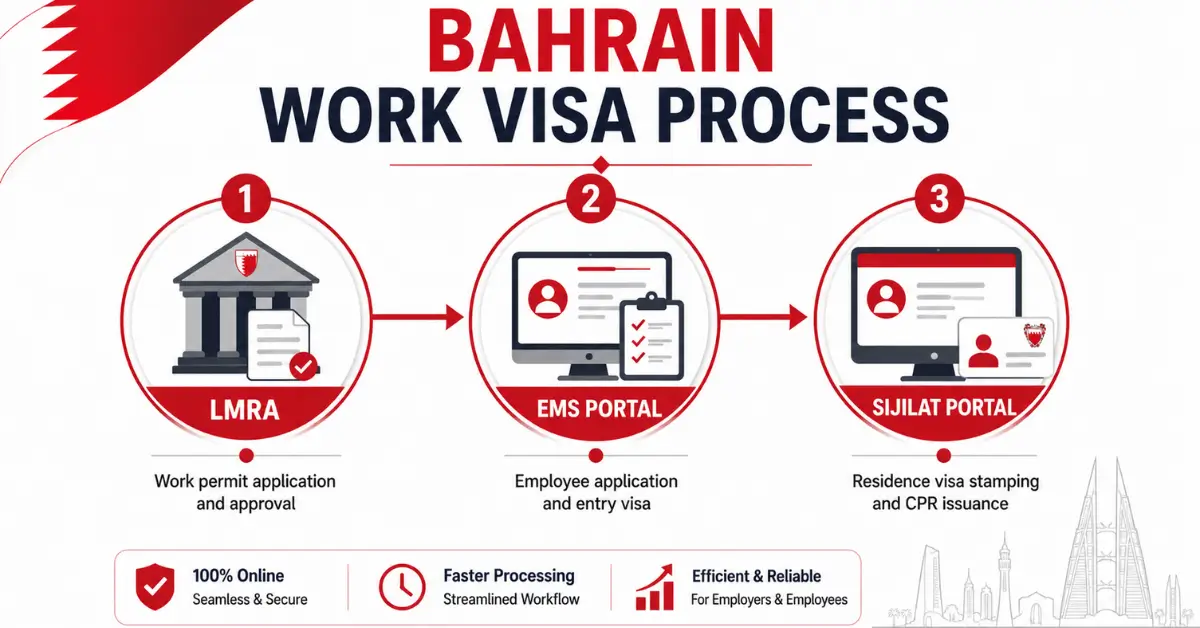
Getting a Bahrain work visa right the first time means understanding one thing most guides skip past: Bahrain doesn’t run a single, one-size-fits-all work permit system. The Labour Market Regulatory Authority (LMRA) oversees several distinct permit categories, each with its own sponsor structure, fee schedule, and eligibility rules. This guide breaks down exactly how the current system works, based entirely on LMRA’s own published fee schedules and process rules.
LMRA: The Authority Behind Every Bahrain Work Visa
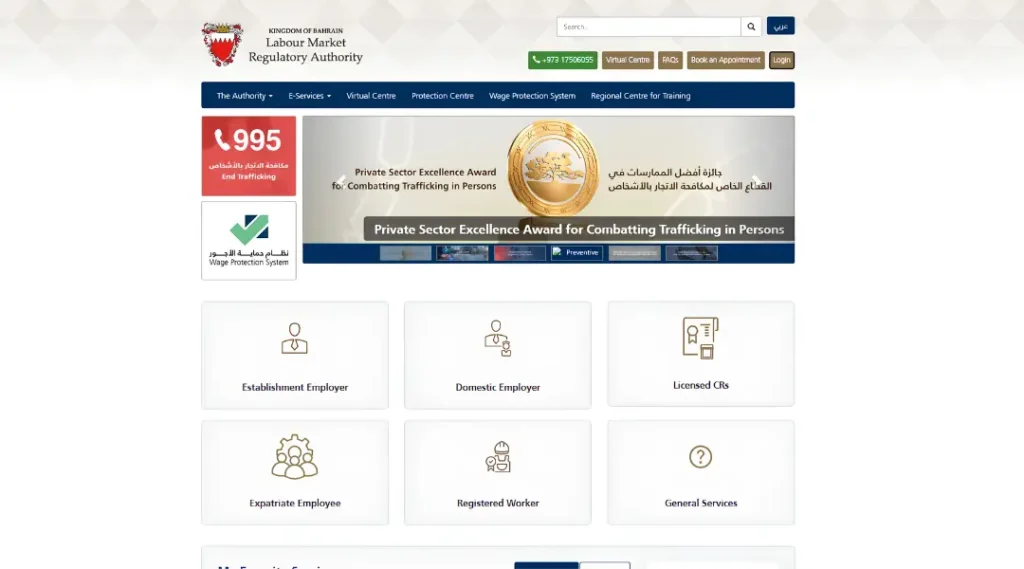
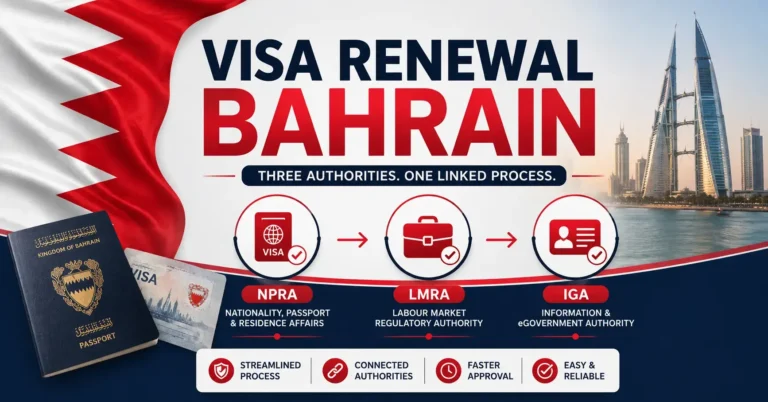
Every Bahrain work visa runs through the Labour Market Regulatory Authority, the government body responsible for issuing, renewing, and cancelling work permits for expatriate employees. LMRA’s primary digital platform, the Expat Management System (EMS), is where employers submit applications, track processing status, pay government fees, and manage employee records. A separate Appointment Management System (AMS) handles in-person LMRA visits when they’re needed. Legitimate employers cover these government fees themselves, applicants being asked to personally pay LMRA work permit fees is not standard practice.
The Standard Employer-Sponsored Work Permit
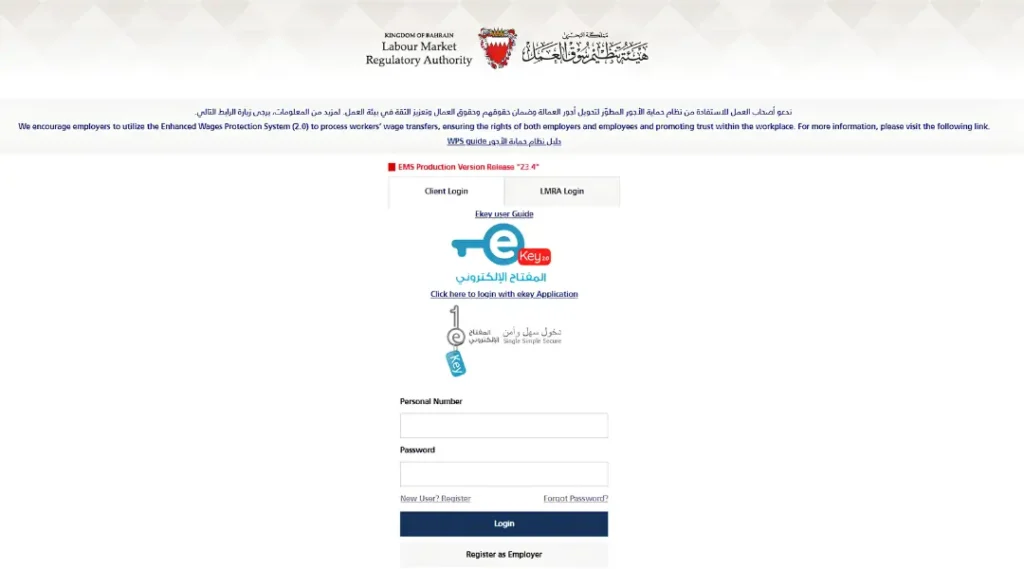
This is the route most people mean when they search for a Bahrain work visa. A registered Bahraini employer applies through LMRA’s EMS on behalf of the foreign worker, submitting the employment details and required documents. Once approved, the process moves through medical fitness testing and biometric data collection, after which the employer pays the applicable work permit fees before the permit is finalised.
The standard permit fee structure, confirmed directly from LMRA’s official fee schedule, is based on duration:
- One-year work permit: BHD 195
- Two-year work permit: BHD 390
- Admin fee: BHD 5, charged in addition to the permit fee itself
- Job advertisement fee: BHD 30, charged only when the application is for an expatriate employee currently outside Bahrain, this covers the mandatory local job vacancy advertisement and is easy to miss if you’re only budgeting for the standard permit cost
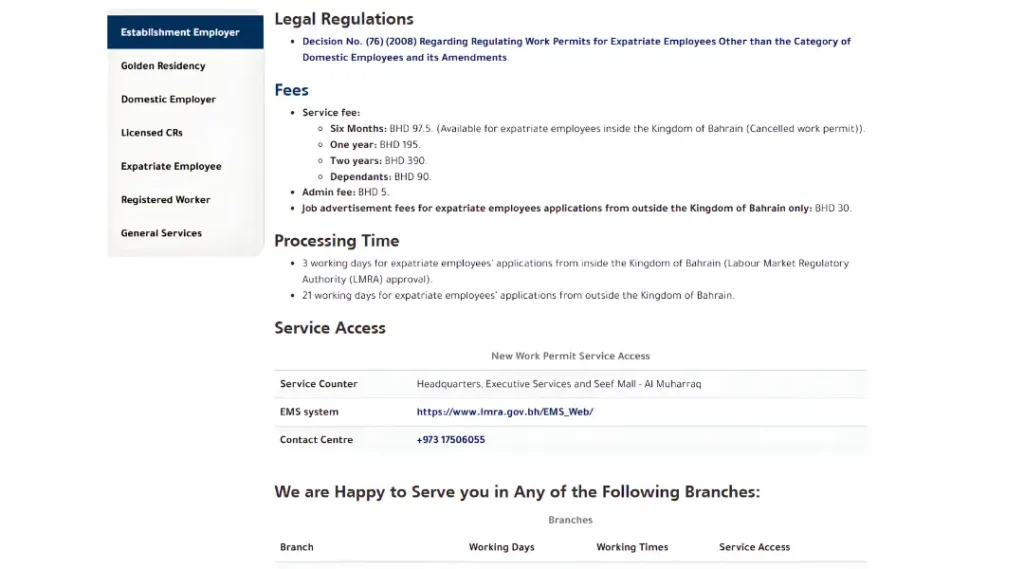
Processing time also depends on where the employee currently is: LMRA confirms 3 working days for applicants already inside Bahrain, versus 21 working days for applicants applying from outside the country.
The Registered Worker Permit (Formerly the Flexi Permit)
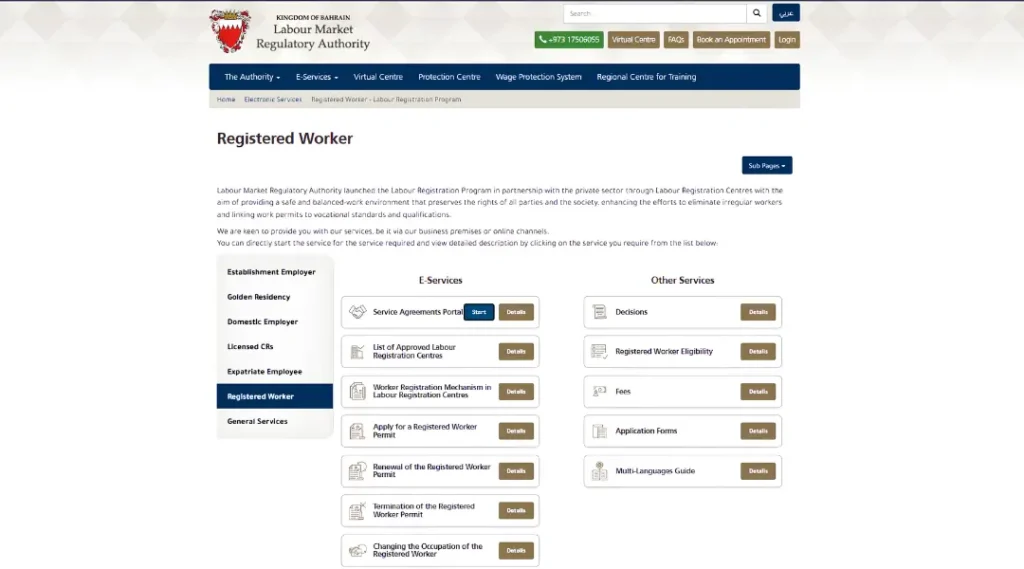
Bahrain’s labour market includes a category that sets it apart from most of its Gulf neighbours: a permit that doesn’t tie a worker to a single sponsoring employer in the traditional sense. Previously known as the Flexi Permit, this category has been formalised under LMRA as the Registered Worker Permit, processed through dedicated labour registration centres, where the worker submits a signed LMRA Registered Worker Permit Service Form along with a passport copy in person.
This route is not the low-cost shortcut it sometimes gets described as. LMRA’s own published fee schedule breaks the total initial registration cost down into several components, permit issuance, mandatory health insurance, a one-time residency extension charge, ticket insurance, a work card fee, and an admin fee, and together these add up to real money:
- Six months: BHD 267.5 total (renewal: BHD 107.5)
- One year: BHD 365 total (renewal: BHD 205)
- Two years: BHD 560 total (renewal: BHD 400)
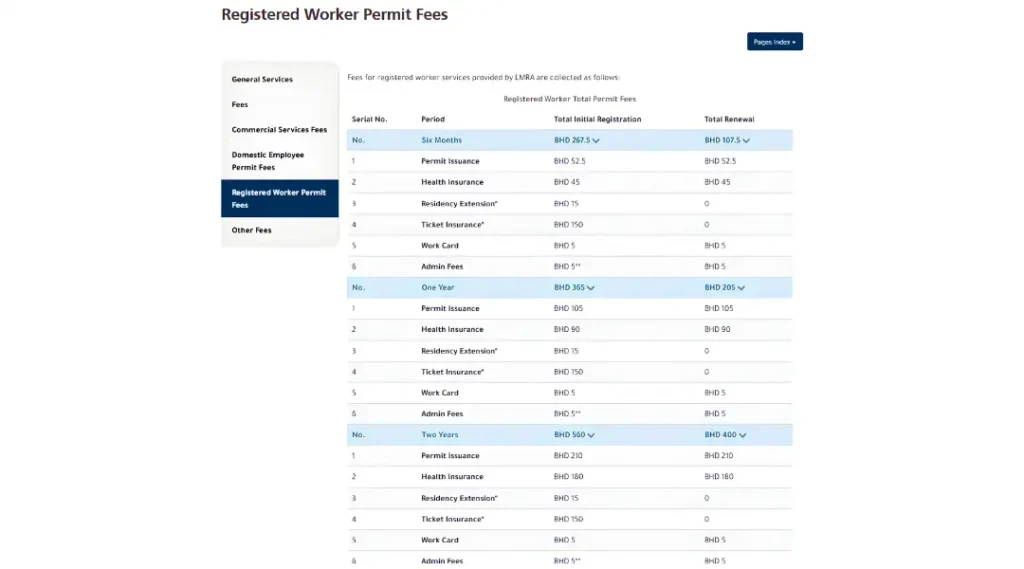
On top of that upfront cost, LMRA also lists a separate monthly fee of BHD 15 for six-month permits under its “Other Fees” schedule, worth budgeting for as an ongoing cost rather than a one-time charge. To join the scheme, a worker completes LMRA’s Registered Worker Permit Service Form, submits it along with a passport copy through an approved labour registration centre, and the application is also transmitted to Bahrain’s Nationality, Passports and Residence Affairs (NPRA) for further scrutiny before approval.
Golden Residency Holders: A Separate Work Permit Track
Expatriates who already hold Bahrain’s Golden Residency have their own dedicated application pathway for a new work permit, distinct from the standard employer-sponsored process. Once approved, the applicant completes biometric data collection and pays the standard permit fees, one year at BHD 195 or two years at BHD 390, plus the BHD 5 admin fee, through EMS or at an LMRA-accredited bank.
Work Permits for Domestic Employees
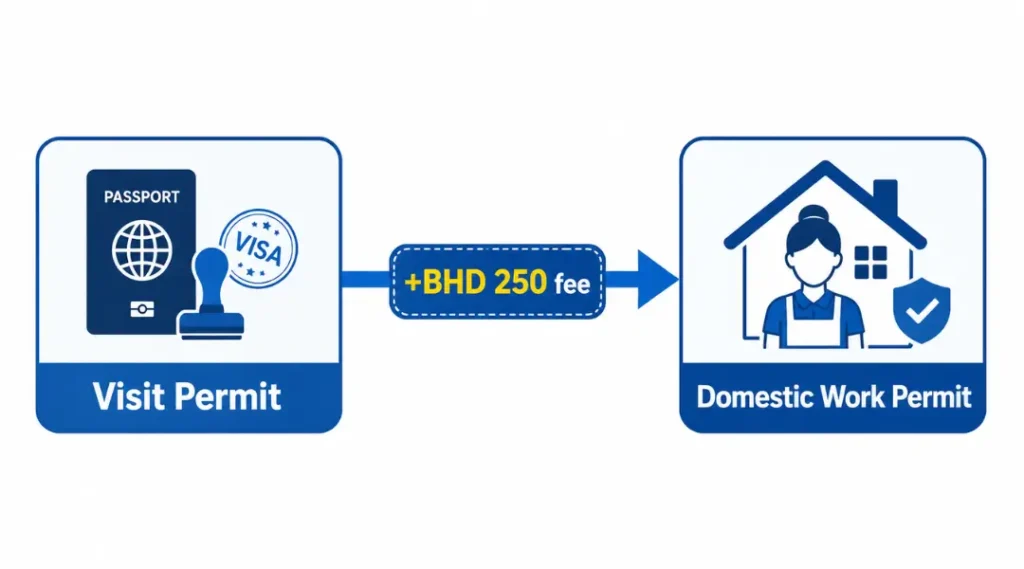
Domestic employee work permits follow a separate fee structure from standard employer-sponsored permits. One detail worth flagging specifically: LMRA charges an additional BHD 250 fee in cases where someone already inside Bahrain on a visit permit applies for a new domestic work permit, a cost that catches many applicants off guard if they weren’t expecting the visit-to-work transition to carry its own separate charge. Applications are submitted through LMRA’s EMS, and employers can also use a self-certification feature, attaching two valid ID cards with signatures, in place of certain manual verification steps.
Bahrain Work Visa Fee Schedule at a Glance
A note on the renewal fee discrepancy: LMRA’s official Work Permit Renewal page currently shows two different figures on the same page, its “Service Conditions” section states BHD 52.5 (6 months) / BHD 105 (1 year) / BHD 210 (2 years), while the page’s own formal “Fees” box, further down the same page, lists BHD 97.5 / BHD 195 / BHD 390 instead, identical to the new-permit fee. Since the formal Fees section is the figure LMRA designates as authoritative, that’s the number used above, but given the contradiction sits on LMRA’s own page, confirming the exact renewal cost directly with LMRA or your accredited bank before budgeting is the safer move.
Step-by-Step: How the Standard Work Permit Process Works
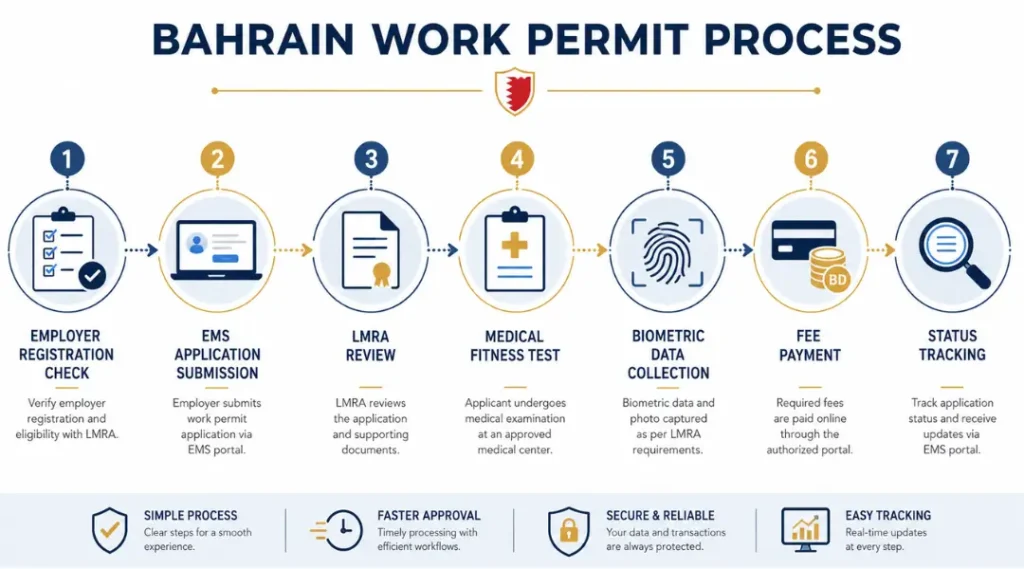
- Your employer confirms LMRA registration and quota eligibility before submitting anything on your behalf. An unregistered or non-compliant employer cannot sponsor a new work permit.
- The employer submits your application through LMRA’s Expat Management System (EMS), including your passport details and supporting documents.
- LMRA reviews and verifies the submitted application, checking both the employer’s standing and the documents provided.
- You complete a medical fitness examination, a standard requirement before permit approval is finalised.
- Biometric data collection takes place, fingerprints and photo, as part of finalising your residency documentation.
- Your employer pays the applicable permit fee (one or two years, plus the BHD 5 admin fee) through EMS or an LMRA-accredited bank once the application is approved.
- You can track your application status directly, either by logging into EMS or calling LMRA’s call centre, rather than relying on secondhand updates.
Once your work permit is approved and you’re settled in Bahrain, keeping track of your renewal timeline matters just as much as the initial application, our guide to Bahrain visa renewal covers exactly when to start that process before your permit lapses. If you’re still comparing Bahrain’s different visa categories before deciding which route fits your situation, our complete Bahrain visa guide breaks down how work, tourist, and residency categories differ.
Frequently Asked Questions
How much does a Bahrain work visa cost in 2026?
The standard employer-sponsored work permit costs BHD 195 for one year or BHD 390 for two years, plus a BHD 5 admin fee. If the employee is applying from outside Bahrain, add a BHD 30 job advertisement fee on top. Domestic employee and Registered Worker Permit categories follow separate, higher fee structures, the Registered Worker Permit in particular totals BHD 365 (one year) or BHD 560 (two years) once health insurance, ticket insurance, and other components are included.
What is the LMRA and why does it matter for a Bahrain work visa?
The Labour Market Regulatory Authority is Bahrain’s government body responsible for issuing, renewing, and monitoring all expatriate work permits. Every legitimate Bahrain work visa application runs through LMRA’s systems, primarily the Expat Management System (EMS).
Can I get a Bahrain work visa without an employer sponsor?
Yes, through the Registered Worker Permit category, formerly known as the Flexi Permit, which lets a worker register through LMRA’s approved labour registration centres by submitting a signed application form in person, rather than requiring a single sponsoring employer in the traditional sense.
How do I check my Bahrain work visa or LMRA application status?
You can check directly by logging into LMRA’s Expat Management System (EMS) or by calling LMRA’s call centre. Relying on an agent’s secondhand update isn’t as reliable as checking your application status directly. For the no-login LMRA Expat Express method using just your CPR and passport number, see our complete Bahrain visa check guide.
Does converting a visit visa to a work visa in Bahrain cost extra?
For domestic employee permits specifically, yes, LMRA charges an additional BHD 250 fee when someone already in Bahrain on a visit permit applies for a new work permit, on top of the standard permit fees.
How long does a standard Bahrain work permit last, and can it be renewed?
Standard work permits are issued for one or two years and can be renewed for 6 months, 1 year, or 2 years depending on the employer’s request, provided the passport remains valid for at least two months at the time of renewal.
Note: This guide reflects the Labour Market Regulatory Authority’s official fee schedules and permit categories, current as of LMRA’s most recent published updates in 2026. Fees, eligibility rules, and processing requirements can be updated by LMRA without advance notice, always confirming current rates and requirements directly through the official LMRA website before applying.